
The In-depth Empowerment of Component Aging Testing on the Durability of AC/DC Power Supplies
In scenarios relying on stable power supply such as industrial automation, medical equipment, and communication base stations, AC/DC power supplies, as the core hub of energy conversion, their durability directly determines the operational reliability and service life of terminal equipment. As the basic building blocks of AC/DC power supplies, components' performance degradation and aging failure are the main causes of power supply malfunctions. Component aging testing is not a simple "long-term power-on test", but by simulating the stress environment under real working conditions, it exposes potential defects in advance, optimizes design redundancy, and ultimately achieves precise improvement of the durability of DC power supplies. This article analyzes its key role from niche technical perspectives, avoiding popular industry expressions and exploring less widely concerned technical details.
1. Core Logic: From "Passive Endurance" to "Active Prediction"
The working process of an AC/DC power supply is an energy transfer process in which alternating current is converted into stable direct current through rectification, filtering, voltage regulation and other links. Core components such as resistors, capacitors, inductors, and MOSFETs continuously bear the combined effect of electrical stress, thermal stress, and mechanical stress. With the passage of service time, components will experience aging phenomena such as material degradation, parameter drift, and structural fatigue. Initially, it manifests as increased output voltage ripple and decreased conversion efficiency, and in the later stage, it may cause fatal faults such as short circuits and open circuits.
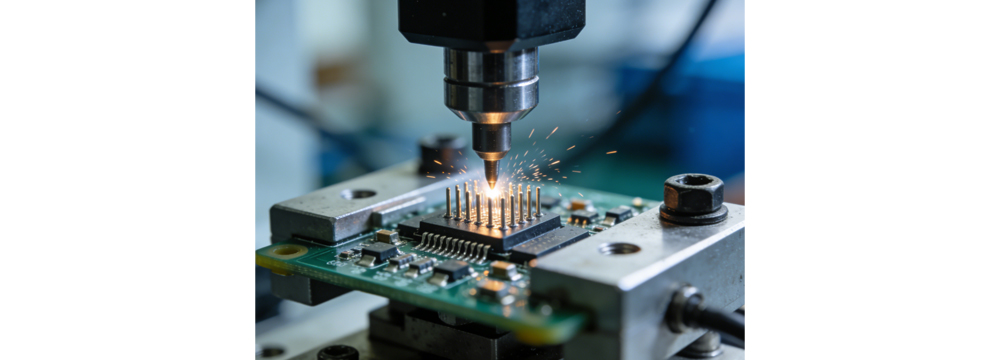
The core of component aging testing is "actively simulating accelerated aging". By applying stress higher than the rated value but not exceeding the limit (such as high temperature, high voltage, high-frequency switching cycles) in a controllable environment, the aging cycle is shortened, allowing defects that would take years to appear to be concentrated and exposed within days. Different from conventional factory inspections that focus on "initial performance", aging testing focuses on "long-term stability". The data can not only reflect the aging law of individual components but also provide an accurate basis for the overall durability design of the power supply. For example, the internal electrolyte of electrolytic capacitors volatilizes with increasing temperature, leading to capacity attenuation and increased equivalent series resistance (ESR), which will affect performance after 3-5 years of conventional use. A 72-hour high-temperature aging test (85°C environment + rated voltage) can accelerate this process, screen out inferior capacitors in advance, and build a solid foundation for durability from the source.
2. Multi-dimensional Stress Simulation: Precise Calibration of Performance Stability
AC/DC power supplies face complex actual working conditions, and factors such as temperature, humidity, and load fluctuations will accelerate component aging. Aging testing verifies the stability of components under extreme working conditions through multi-dimensional stress simulation, and these refined test dimensions are often ignored by the industry.
The temperature cycle aging test quickly switches within a wide temperature range of -40°C to 85°C (heating rate 5°C/min, holding time 30min/cycle), simulating thermal expansion and contraction during power supply startup and shutdown, testing the fatigue resistance of packaging materials and the reliability of pin connections. It can expose the thermal stability defects of the PN junction of power diodes and avoid increased reverse leakage current during low-temperature startup. The electrical stress aging test applies 1.2 times the rated voltage and 1.1 times the rated current, combined with more than 100,000 switching cycles. Through high-precision oscilloscopes to monitor waveform changes, it captures parameter drift laws, identifies unqualified switching devices in advance, and prevents thermal runaway faults. The damp-heat aging test places components in an environment of 40°C and 90% relative humidity for 1000 hours to simulate humid corrosion, testing the oxidation rate of pins and the moisture-proof performance of packaging, avoiding performance drift of ceramic capacitors due to moisture absorption.
3. Optimizing Design Redundancy: From Screening to System Upgrade
The value of aging testing lies not only in screening qualified components but also in providing data support for power supply design optimization and realizing system-level durability upgrades.
In the selection stage, due to differences in production processes, components of the same model may have significant differences in aging rates. By comparing parameter drift and failure probability through batch aging tests, suppliers with better aging performance can be selected. For example, in voltage stabilization circuits, choosing reference chips with parameter drift less than ±0.1% after 1000 hours of high-temperature aging can ensure long-term output accuracy. At the design level, engineers can increase redundancy according to aging laws. An industrial-grade power supply manufacturer found that the on-resistance of MOSFETs increased by 20% after 1000 hours of aging, so it increased the heat dissipation design redundancy from 15% to 25%. After optimizing the drive parameters, the mean time between failures (MTBF) increased from 50,000 hours to 80,000 hours.
4. Key Value in Niche Scenarios and Cognitive Misunderstandings
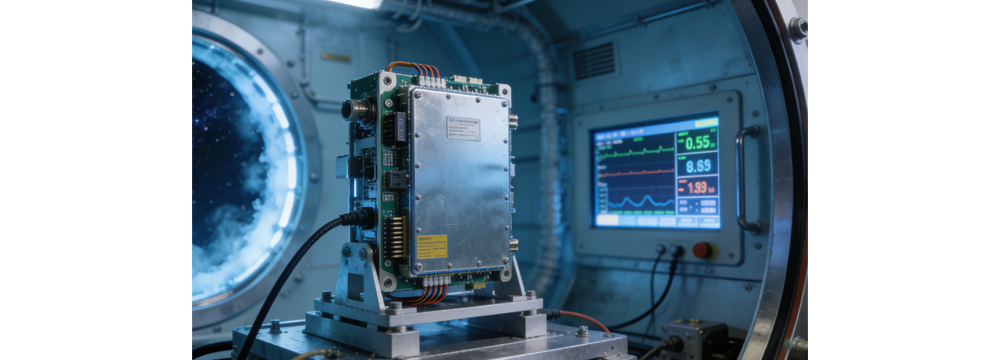
In niche high-demand scenarios such as deep space exploration and industrial explosion protection, aging testing plays a particularly critical role. Power supplies for deep space exploration equipment need to withstand extreme environments, so aging testing must include cobalt-60 γ-ray radiation simulation. An aerospace enterprise extended the service life of the power supply from 1 year to 3 years through a 100kGy dose test; components of industrial explosion-proof power supplies need to pass 1000 insertion and extraction + vibration stress tests to ensure reliable terminal contact, reducing the failure rate from 0.8% to 0.1%.
There are cognitive deviations in the industry regarding aging testing: some enterprises simplify it to "long-term power-on at room temperature", which cannot simulate real stress peaks; ignore the synergistic aging effect of components and fail to conduct component-level tests, leading to accelerated aging due to electromagnetic interference; only focus on whether it fails, ignoring the trend analysis of parameter drift, missing optimization opportunities.
5. Conclusion
Component aging testing is a core means to improve the durability of AC/DC power supplies. Through precise stress simulation and scientific data analysis, it optimizes design and predicts faults. In the industry trend of pursuing "high efficiency and miniaturization", its niche technical details are often ignored, but they determine the long-term reliability of power supplies under complex working conditions. In the future, with technological development, aging testing will evolve towards multi-stress coupling and intelligent data interpretation. Enterprises that pay attention to these technical details and avoid cognitive misunderstandings can win market trust with more reliable products.
Share our interesting knowledge and stories on social media