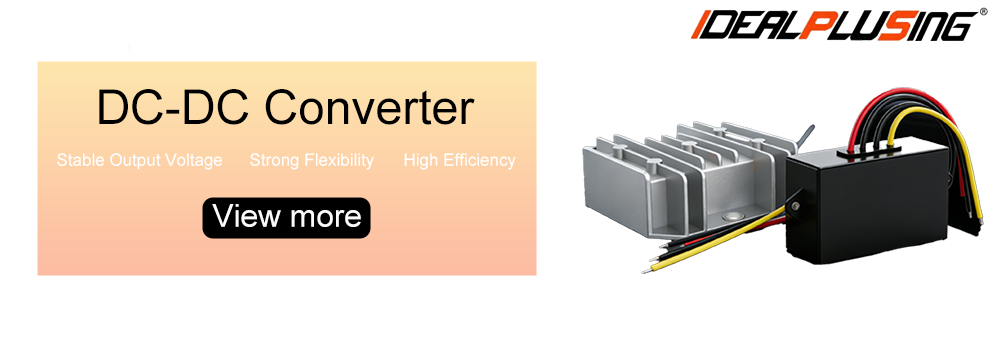
In modern electronic systems, DC-DC converters are ubiquitous—from smartphones and laptops to electric vehicles and industrial control systems. They efficiently convert one DC voltage level to another. However, in practical applications, engineers often observe that even with an ideal DC input, the output still exhibits small AC fluctuations. This phenomenon is commonly known as “output ripple.”
So, where exactly does the output ripple in a DC-DC converter originate? This article dives deep into its root causes and briefly discusses effective strategies for ripple suppression.
1. What Is Output Ripple?
Output ripple refers to the periodic AC component superimposed on the DC output voltage of a converter. It’s typically quantified by peak-to-peak (Vpp) or RMS values. Ideally, the output should be a perfectly flat line; in reality, however, switching actions, parasitic elements, and imperfect filtering inevitably introduce some degree of voltage fluctuation.

2. Primary Sources of Ripple
(1) Current Ripple from Switching Action
Switch mode converters, like the Buck and the Boost and the Buck-Boost converters work by turning power switches on and off fast. The power switches are, like kinds of transistors called MOSFETs. They help control how energy is moved around. Lets look at the Buck converter for example:
·When the high-side switch turns on the inductor current starts to increase fast. This means the high-side switch is sending energy to two places: the load and the output capacitor. The high-side switch is working to make sure the load and the output capacitor get the energy they need.
·When the switch turns off the freewheeling diode or the synchronous rectifier MOSFET starts to conduct. At this point the current in the inductor begins to decrease. The freewheeling diode helps with this process and the current in the inductor ramps. This is what happens when the switch is, in the position and the freewheeling diode is doing its job.
Key Equation (Buck Converter Example):
Approximate output ripple voltage:
Vripple≈8CoutfswIL(pp)
where IL(pp) is the peak-to-peak inductor current ripple, Cout is the output capacitance, and fsw is the switching frequency.
(2) Equivalent Series Resistance (ESR) of the Output Capacitor
Real world capacitors are not perfect. They have something called Equivalent Series Resistance or ESR, for short. When the ripple current flows through the capacitor that gives power to the output the capacitors ESR causes a voltage drop. This voltage drop happens because of the capacitors Equivalent Series Resistance.
VESR=IL(pp)×ESR
The voltage drop is added to the output voltage. It causes a ripple that happens at the same time as the switching frequency. This is a problem with aluminum electrolytic capacitors because they have a high ESR. The ripple caused by the ESR is often bigger, than the ripple caused by the capacitor charging and discharging. Aluminum electrolytic capacitors have an ESR and this makes the ESR-induced ripple very strong.
(3) Parasitic Inductance from PCB Layout
With low-ESR capacitors a bad layout of the circuit board can cause more ripple because of the extra inductance in the wires. Common issues, with low-ESR capacitors include:
·Placing the output capacitor too far from the IC;
·Long ground return paths;
·Large switching node loops that radiate noise and couple into the output.
These parasitic inductances, which are usually a few to tens of nanohenries can cause big voltage spikes when the current changes really fast. This is because the voltage is equal, to the inductance times the rate of change of the current or V equals L times di over dt. The parasitic inductances make the ripple performance even worse. The parasitic inductances are a problem because they can make the voltage spikes really big when the current is changing quickly.
(4) Control Loop Response and Stability
The feedback control loop is really important for how things react when they change and for staying stable. But if the loop is not designed well like if it does not have bandwidth or a good phase margin it can cause some big problems. These problems can be things, like oscillations that happen at frequencies that're too low or the system can be really slow to respond when the load changes. This can show up as a humming noise or a ringing sound. The feedback control loop can make the system have these frequency problems if it is not done right.

3. How to Reduce Output Ripple?
Understanding the origins of ripple enables targeted design improvements:
·Increase Switching Frequency: Higher fsw reduces inductor current ripple and required capacitance—but increases switching losses.
·Use Low-ESR / Low-ESL Capacitors: Ceramic capacitors (e.g., MLCCs) offer extremely low ESR and ESL, making them ideal for high-frequency filtering. Combining capacitors of different values can provide broadband noise suppression.
·Optimize Inductor Selection: A larger inductance reduces current ripple but may compromise transient response speed.
·Careful PCB Layout:
Place output capacitors as close as possible to the IC’s VIN/VOUT pins;
Minimize the area of high-di/dt power loops (especially the switching node);
Use solid ground planes to reduce loop inductance.
4. Conclusion
Output ripple in DC-DC converters is not a “defect”—it’s a natural consequence of their operating principles and physical limitations. Great power supply design isn’t about achieving “zero ripple,” but about striking the optimal balance among efficiency, cost, size, and performance.
Share our interesting knowledge and stories on social media