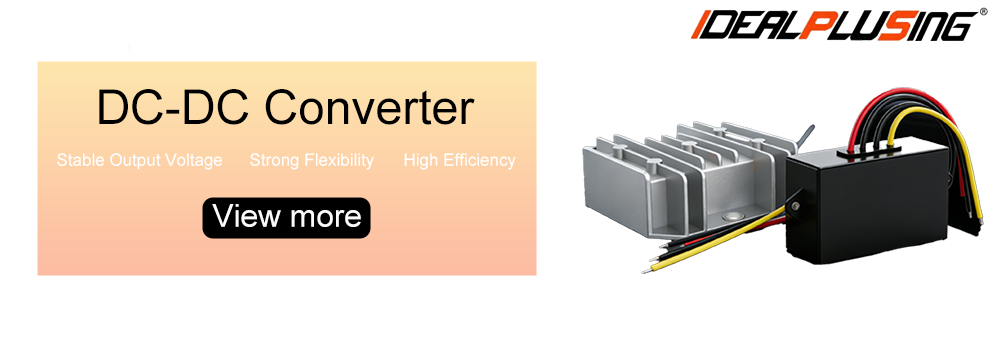
In a vehicle the DC-DC converter takes the power from the high-voltage battery pack and lowers it to a level that is not so high. The DC-DC converter then sends this lowered power to things like the headlights the lights inside the car and the music system. This helps all these things in the electric vehicle work properly and not stop suddenly. The DC-DC converter is important, for the vehicle.
What Is a DC-DC Converter?
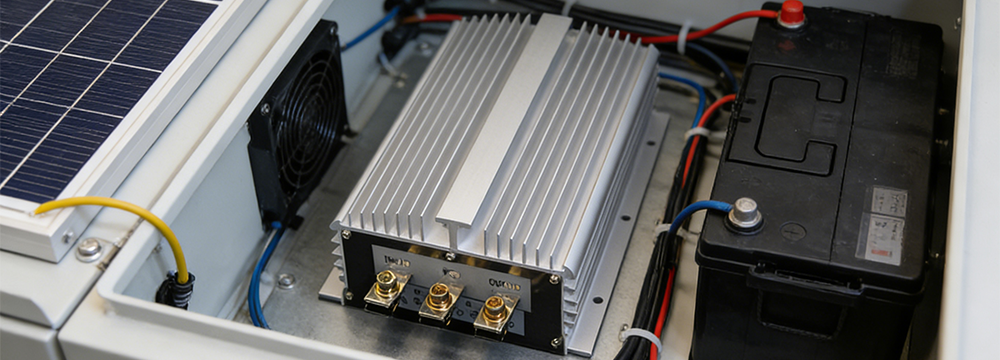
Every part of a vehicle needs a steady power supply to function. The electric vehicle has many components and the electric vehicle relies on these batteries to work properly. The electric vehicle uses the high-voltage lithium-ion battery for the parts, like the motor and the electric vehicle uses the low-voltage lead-acid battery for smaller things.
Tasked with voltage regulation in electric vehicles, the DC-DC converter takes power from the high-voltage battery and converts it to a lower voltage output. It is this output that supplies power to low-voltage electrical accessories—including lighting systems and audio equipment—guaranteeing their consistent performance.
Electric vehicles depend on a dual-voltage power setup to meet the needs of all components. The high-voltage lithium battery powers the vehicle’s traction motor, whereas low-voltage devices such as lights and cameras are supported by a lead-acid battery.
Why High Voltage is Used?
The vehicle’s motor needs high voltage to work. That’s because the motor requires a lot of power. If you tried to run it on low voltage, it would produce a large current. This large current would make the circuit lose more energy. It would also lower the conversion efficiency. To boost efficiency, high voltage (over 400V) is used. This helps reduce the current.
Market and Equipment Trends
In the future, more electric vehicles will hit the market. As a result, the demand for DC/DC converters will also go up. Besides, more and more devices are becoming electric. This means DC/DC converters need to support higher power output. There’s also a growing demand for these converters to have higher output while being smaller in size.
To meet these needs, electronic components must have certain features. They need to handle high voltage (high voltage resistance) and high current. They should also have low energy loss, high heat resistance, small size, and high precision. These features are key to achieving the required performance.
Circuit Structure of a DC/DC Converter
Overall Structure
- Voltage Conversion Circuit: Uses switching parts like isolated transformers and FETs to change voltage.
- Noise Filter (Output Side): Uses capacitors and coils to get rid of noise.
- Voltage Detection (Output Side): Measures the voltage that comes out of the converter.
- Control Circuit: Manages the conversion circuit and other related parts.
- Power Supply for Control Circuit: Provides power to the control circuit (integrated in the DC/DC converter).
The DC/DC converter is really important. It does a lot more than just control the voltage. The DC/DC converter is like a connection between the two power systems, in electric vehicles. It helps the parts that make the vehicle move and the smaller parts that do other things work together smoothly. As the electric vehicle industry tries to make things better the DC/DC converter will have to change.
Share our interesting knowledge and stories on social media