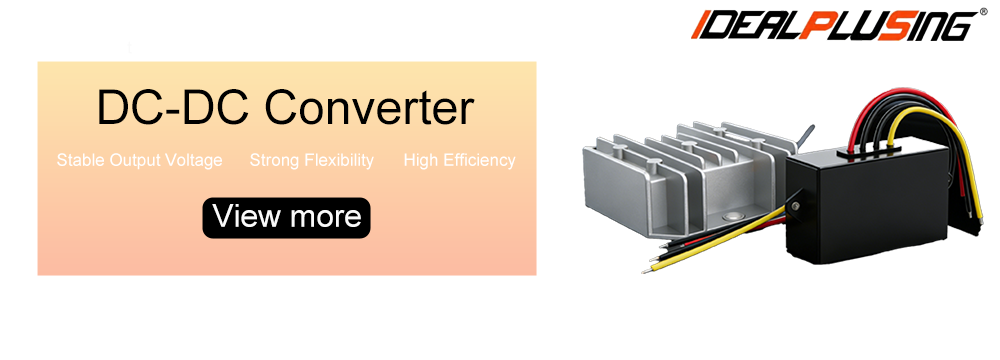
In the process of upgrading industrial power systems towards higher efficiency, stability, and intelligence, the technological iteration of DC-DC converter is a core driving force. The optimization and innovation of topological structures and the precise upgrading of anti-interference design have become key factors in overcoming traditional application bottlenecks and adapting to complex industrial conditions. This not only reshapes the performance boundaries of DC-DC converters but also provides core technical support for the reliable operation of industrial equipment, becoming a significant breakthrough in industry technology upgrades.
As the core architecture of DC-DC converters, the design iteration of topological structures directly determines conversion efficiency, load adaptability, and operational stability, and is a core direction for overcoming traditional technological limitations. Early basic topological structures struggled to meet the demands of multiple scenarios, while new-generation topological designs, through structural optimization and multi-topology integration, have achieved comprehensive performance improvements. For the high-power and shock-resistant requirements of heavy industrial equipment, optimized full-bridge and half-bridge topologies utilize symmetrical switching structures, significantly reducing switching losses and achieving conversion efficiencies of over 95%. They also enhance resistance to instantaneous overloads, perfectly adapting to the startup and operation requirements of heavy loads such as machine tools and frequency converters.
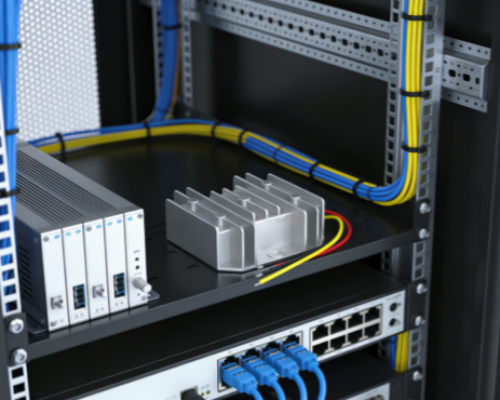
For electrical isolation and interference blocking requirements, flyback and forward topologies introduce optimized magnetic coupling designs. By precisely controlling magnetic core energy transfer, they achieve electrical isolation between the input and output ends, effectively blocking high-voltage interference and signal crosstalk, adapting to high-safety scenarios such as high-voltage industrial control and medical equipment. Facing wide-voltage input scenarios such as new energy storage and vehicle power supplies, the innovative application of SEPIC and Buck-Boost composite topologies breaks through the limitations of narrow voltage adaptation ranges in traditional topologies, maintaining output stability under wide input voltage fluctuations, providing flexible power solutions for emerging industrial fields. Furthermore, the deep integration of digital control and topological structures makes topology switching more intelligent, allowing for dynamic adjustment of the topological operating mode based on load changes and voltage fluctuations, achieving a dynamic balance between efficiency and stability, becoming an important extension of topological technology breakthroughs.
In industrial environments, strong electromagnetic interference, dust and moisture, and extreme temperature differences have been major constraints on the operational stability of DC-DC converters. The systematic upgrading of anti-interference design has become a key breakthrough in overcoming this bottleneck. The anti-interference design of the new generation of DC-DC converters has been upgraded from single-point protection to a comprehensive, multi-layered protection system, achieving a technological leap from passive resistance to active shielding. In terms of electromagnetic interference protection, the integration of high-performance EMI filtering modules, coupled with differential and common-mode interference suppression circuits, effectively weakens the impact of high-frequency electromagnetic radiation and conducted interference in industrial environments on power signals. This ensures that output power ripple and noise are controlled at the millivolt level, meeting the high-precision power supply requirements of precision instruments, intelligent sensors, and other equipment.
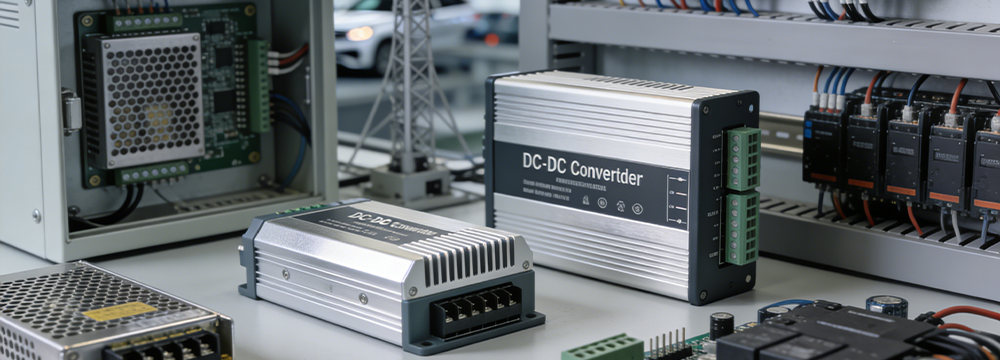
In terms of environmental adaptability and anti-interference design, industrial-grade DC-DC converters adopt a sealed structure design, with protection levels generally upgraded to IP54 and above, effectively isolating dust and moisture intrusion. Combined with wide-temperature range components, they can operate stably in extreme temperature differences from -40℃ to 85℃, slowing down the aging rate of core components such as internal capacitors and inductors. Furthermore, the anti-interference design extends to the mechanical structure level, optimizing solder joint layout through anti-vibration reinforcement design and using anti-vibration components to fix core components. This resists vibration shocks during industrial equipment operation, preventing poor contact and malfunctions caused by mechanical displacement, forming a triple anti-interference defense line against electromagnetic, environmental, and mechanical interference, significantly improving the reliability of the converter in complex working conditions.
The technological breakthroughs in topology structure and anti-interference design are not isolated; their deep integration is key to DC-DC converters adapting to the needs of industrial upgrading. The optimized topology structure provides a foundation for anti-interference design by reducing switching noise and energy loss, weakening interference sources from the source. A comprehensive anti-interference design, in turn, guarantees the stable operation of the topology structure, ensuring it maintains optimal working conditions in complex environments. This synergistic upgrade allows DC-DC converters to not only break through the performance and application limitations of traditional applications but also adapt to the stringent requirements of intelligent manufacturing, new energy, metallurgy, and chemical industries. It provides core technical support for the efficient and stable operation of industrial power systems and lays a solid foundation for subsequent intelligent and miniaturized technology upgrades, continuously leading the technological innovation direction in the industrial power supply field.
We at IDEALPLUSING not only provide products, but also strive to provide customers with suitable power supply solutions and quotations.
Our core competitiveness lies in carefully selecting a variety of power supply options to help customers evaluate and choose the most suitable power supply solution.
We can offer AC DC power supply, DC AC inverter, AC AC power source(single phase or 3 phases),AC DC Ground Power Unit...
Share our interesting knowledge and stories on social media