As a core device for converting direct current to alternating current, power inverters are widely used in scenarios such as vehicle power supply, household emergency backup, and outdoor camping. Choosing the right power inverter power can not only avoid the embarrassment of equipment failing to start but also prevent damage caused by "a small horse pulling a big cart". Many users easily fall into the misunderstanding that "the higher the power, the better" when choosing. In fact, as long as you master scientific methods, you can accurately match your needs.
Step 1: Clarify Load Types and Grasp Core Power Requirements
Before determining the power inverter power, you first need to clarify the types of all equipment to be powered. Equipment is divided into two categories: continuous operation loads and loads with startup impact. The former, such as lights and laptops, have stable power; the latter, such as refrigerators, air conditioners, and power tools, will generate surge power 2-6 times the rated power at the moment of startup.
You need to record the rated power of each device one by one, especially confirming whether equipment with motors and compressors has clear startup power parameters. For example, a 150W refrigerator may have a startup power of 750W. If this point is ignored, an ordinary low-power power inverter will directly trigger protection and shut down.
Step 2: Scientifically Calculate Total Power and Reserve Reasonable Redundancy
When calculating the total power, first add the rated power of all equipment running simultaneously to get the basic continuous power. On this basis, it is necessary to superimpose the maximum surge power—that is, the maximum startup power value among all equipment, plus the sum of the rated power of other equipment.
To ensure the stable operation of the power inverter, it is necessary to reserve 20%-30% power redundancy. This can not only cope with the power increase caused by equipment aging but also reduce the operating loss of the power inverter and extend its service life. A simple formula can be referenced: Required power inverter power = (sum of continuous power + maximum surge power) × 1.2-1.5.
Step 3: Adjust Power Selection According to Application Scenarios
Different scenarios have significantly different requirements for power inverter power. In vehicle scenarios, power inverters powered through the cigarette lighter are limited by the circuit. It is recommended to choose 100-150W, which is only suitable for mobile phones and small chargers; if you need to drive a car rice cooker or vacuum cleaner, you need to choose a high-power model above 1000W and connect it directly to the car battery.
In household emergency scenarios, a 500-1000W power inverter is sufficient if you only need to power refrigerators, lighting, and routers; industrial or large-scale photovoltaic systems need to choose three-phase power inverters above 10kW according to the total power of the equipment. For outdoor camping, combined with portability requirements, a pure sine wave power inverter within 2000W is the mainstream choice.
Key Reminder: Tips for Power Matching and Brand Selection
The power of the power inverter is not as large as possible. Excessively large power will increase no-load loss and may cause cost waste. At the same time, it should be noted that the peak power of the power inverter must be greater than the calculated total surge power, and the continuous power must cover the daily operation needs.
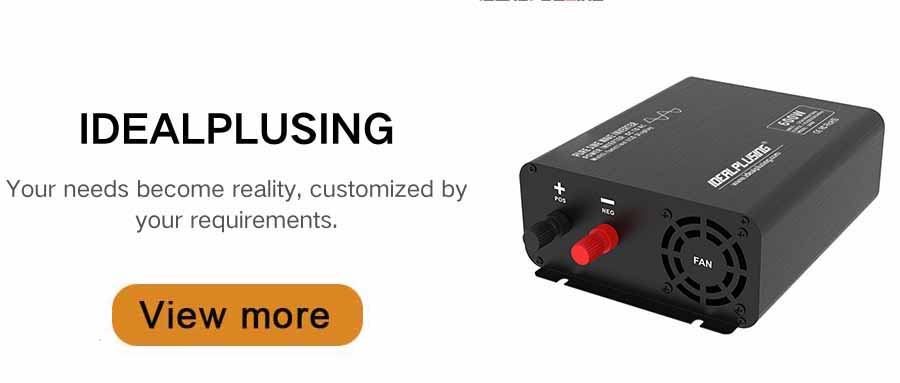
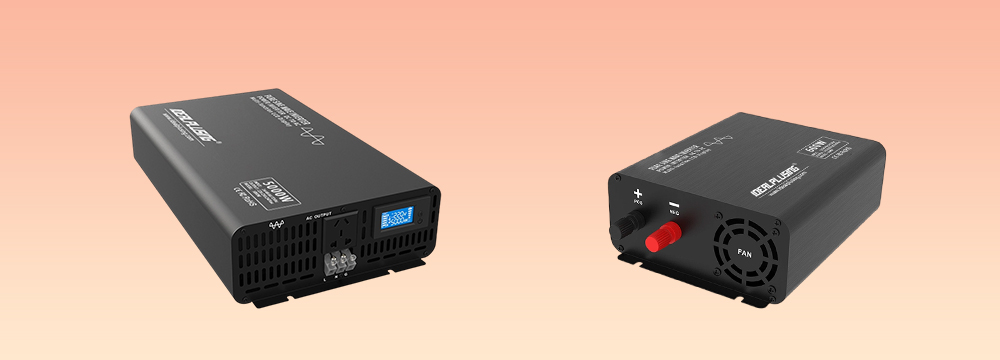
When choosing, you can pay attention to the brand's technical strength. Brands like IDEALPLUSING that focus on adaptability have reliable performance in balancing power output and load requirements with their power inverter products. In addition, priority should be given to products with a conversion efficiency of more than 90%, which can reduce energy loss and make the power of the power inverter more fully utilized.
By following the idea of "clarifying the load - accurate calculation - scenario adaptation", you can avoid the pitfalls of power selection and make the power inverter truly adapt to the usage needs, making it more worry-free whether for emergency power supply or daily use.
IDEALPLUISNG Power Expert:
We focus on the research and development, sales and services in the fields of DC-DC power modules, AC-DC rectifier modules, DC-AC inverters, AC power supplies, DC power supplies, LED power supplies, chargers, rectifier systems, etc., providing personalized, efficient, reliable and cost-effective power solutions for all walks of life.
Thank you for considering our services.