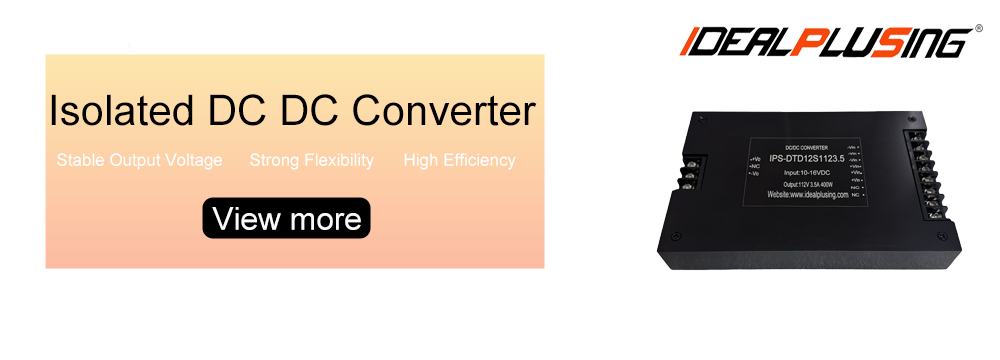
In non-civilian power electronics applications such as industrial power conversion and precision equipment power supply, DC-DC isolation converters, as core components for safe power conversion and transmission, directly determine the stability and safety of the entire power supply system through their performance and inherent characteristics. The core value of DC-DC isolation converters lies in achieving precise DC voltage conversion through electrical isolation, while simultaneously avoiding interference between circuits and potential electrical safety hazards. Although these devices are not geared towards the mass consumer market, they are indispensable in fields such as industrial automation and special power equipment.
Performance of DC-DC Isolation Converters
The first performance advantage of DC-DC isolation converters lies in the stability of electrical isolation. Complete electrical isolation between the input and output terminals is achieved through a high-frequency isolation transformer. The withstand voltage can be adapted to the needs of different industrial scenarios, effectively blocking common-mode interference and ground loop effects, allowing the DC-DC isolation converter to maintain pure signal and power transmission even in electromagnetically complex industrial environments. Secondly, DC-DC isolation converters exhibit outstanding voltage conversion efficiency. Employing a dedicated topology design and high-frequency switching technology, they maintain an efficiency above 95% in medium-to-high power DC conversion scenarios, reducing energy loss during conversion and meeting the demands of long-term continuous operation of industrial equipment.
Simultaneously, DC-DC isolation converters possess a wide input voltage adaptability, capable of handling small fluctuations in DC voltage within industrial power grids. Output voltage accuracy can be controlled within ±0.5%, with low ripple voltage, providing stable DC power to precision loads. This is a key performance factor supporting the application of DC-DC isolation converters in precision instruments and industrial control modules. Furthermore, high-quality DC-DC isolation converters possess rapid dynamic response capabilities. When load changes occur, voltage regulation can be completed quickly, ensuring output stability and preventing equipment shocks caused by load variations.
Inherent Characteristics of DC-DC Isolation Converters
The structural characteristics of DC-DC isolation converters are primarily modular design. This design facilitates installation, commissioning, and subsequent maintenance, while supporting parallel expansion of multiple units. It can be flexibly adjusted according to actual power requirements, adapting to industrial systems of different sizes. In terms of protection, DC-DC isolation converters incorporate multiple protection mechanisms, including rapid response for overvoltage, overcurrent, short circuit, and overtemperature protection. This allows the converter to promptly disconnect the circuit under abnormal operating conditions, ensuring the safety of itself and downstream equipment and improving the overall system reliability.
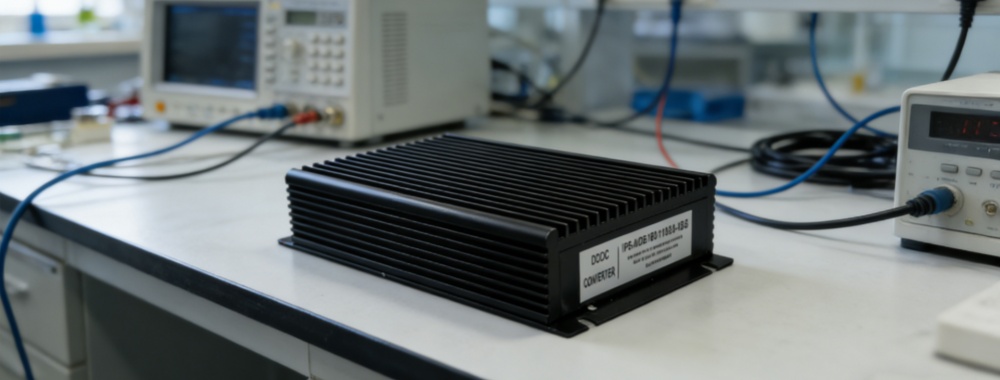
Environmental adaptability is also an important characteristic of the DC isolated converter. Industrial-grade DC isolated converters can work in a wide temperature range of -40℃ to +70℃, and some models also have dustproof and moisture-proof protection levels, which can adapt to harsh working environments such as mines, rail transit, and outdoor photovoltaic supporting facilities. In terms of function expansion, the DC isolated converter can integrate communication interfaces to realize remote monitoring of operating status and parameter adjustment, allowing the DC isolated converter to integrate into the intelligent industrial control system.
Applications and Selection Guide for DC Isolation Converters
DC isolation converters are widely used in industrial automation control, rail transit traction power supply, specialized medical equipment, and new energy storage. They primarily handle high-voltage DC to low-voltage DC conversion, low-voltage DC boosting, and isolated power transmission. For example, in rail transit, DC isolation converters convert the high-voltage DC from the traction network to the low-voltage DC required for equipment control, while simultaneously achieving electrical safety isolation. When selecting a DC isolation converter, in addition to focusing on core parameters such as power and voltage, it is also necessary to consider its isolation withstand voltage, environmental adaptability, and protection functions. IDEALPLUSING's DC isolation converters, with their stable performance and adaptability, have become the preferred choice for many professional equipment in industrial scenarios.
Although DC isolation converters are not widely known electrical devices, they play an irreplaceable role in the professional power electronics field. Continuous optimization of their performance and characteristics is driving industrial power supply systems towards greater efficiency, safety, and intelligence. A deeper understanding of DC isolation converters can also provide more accurate references for the design and maintenance of industrial power systems.
IDEALPLUISNG Power Expert:
We focus on the research and development, sales and services in the fields of DC-DC power modules, AC-DC rectifier modules, DC-AC inverters, AC power supplies, DC power supplies, LED power supplies, chargers, rectifier systems, etc., providing personalized, efficient, reliable and cost-effective power solutions for all walks of life.
Thank you for considering our services.