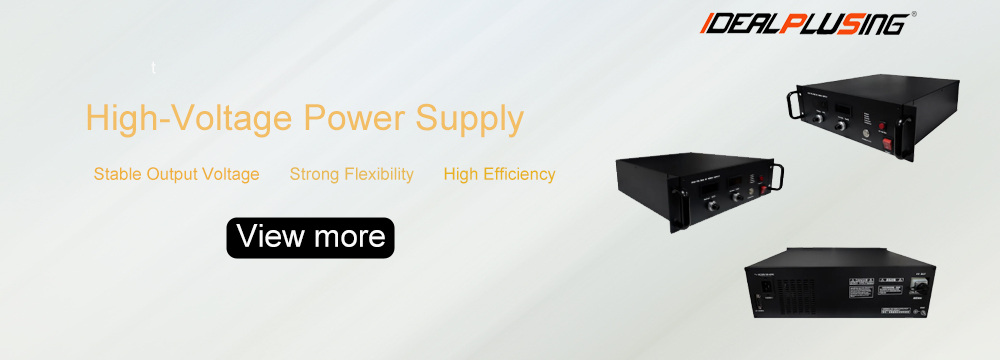
As the core component of power electronic equipment, HV power supply circuit components operate in an environment with high voltage, large current and stringent insulation requirements. The reliability of welding joints directly determines the voltage resistance, heat dissipation and service life of the entire power supply product. Conventional welding processes such as soldering and manual arc welding are difficult to adapt to the precision welding requirements of HV power supply components due to large thermal deformation and insufficient solder joint stability. However, some niche and targeted welding processes, with their unique technical advantages, have become the preferred solutions for the processing of HV power supply circuit components. Although these processes are not popular in the general electronic manufacturing field, they can accurately solve the welding pain points in high-voltage scenarios.
Vacuum Electron Beam Welding: A Non-oxidation Welding Solution for High-voltage Precision Components
Vacuum electron beam welding is a niche welding process suitable for the core power components of HV power supplies. It accelerates the electron beam through a high-voltage electrostatic field to form a high-energy density heat source, and realizes metal fusion in a vacuum environment, completely avoiding the impact of air oxidation on solder joints. This characteristic is particularly important for the welding of new semiconductor power devices such as silicon carbide (SiC) and gallium nitride (GaN) in HV power supplies. The heat-affected zone of this process is extremely narrow, and the welding deformation can be controlled at the micron level, which can effectively protect the precise insulating substrates and pin structures in HV power supply circuit components, and avoid insulation layer cracking and pin offset caused by thermal stress.

In the welding of solid-state transformer (SST) components of HV power supplies, vacuum electron beam welding can realize reliable fusion of copper-aluminum dissimilar metals. The electrical conductivity and mechanical strength of the solder joints can meet the long-term working requirements under high-voltage direct current (HVDC) scenarios, and the voltage resistance of the welding joints can reach more than kilovolt level, which is in line with the insulation standard of 800V HV power supply circuits. In addition, the weld formed by this process is uniform without solder residue, which can effectively reduce the risk of partial discharge during the operation of HV power supply components and improve the insulation stability of the circuit.
Capacitor Energy Storage Electronic Spot Welding: A Precision Welding Process for Miniature High-voltage Components
Capacitor energy storage electronic spot welding is a special welding process for miniature components in HV power supply circuits, featuring "instant high energy and precise temperature control". It completes solder joint fusion in an extremely short time through the pulse current released by the capacitor in an instant, with extremely low total heat input, which will not cause thermal damage to surrounding sensitive devices such as high-voltage capacitors and high-voltage diodes. This process can directly weld enameled wires with a wire diameter of 0.008~1.00mm to metal pads without removing the enameled insulation or adding flux. The metal alloy layer formed by the solder joint has strong oxidation resistance and extremely low contact resistance, which can meet the requirements of low-loss transmission in HV power supply circuits.
The advantages of capacitor energy storage electronic spot welding are particularly prominent in the welding of signal sampling circuits and high-voltage protection circuit components of HV power supplies. Its solder joints are small with a positioning accuracy of up to 20um, which can complete precise welding on dense high-voltage circuit boards, avoid creepage between solder joints, and improve the voltage resistance and safety of the circuit. At the same time, the solder joints of this process are high temperature resistant and vibration resistant, and during the long-term operation of HV power supply equipment, faults such as solder joint falling off and poor contact are not easy to occur, which greatly improves the working reliability of circuit components.
Vacuum Diffusion Welding: An Integrated Welding Process for HV Power Supply Composite Substrates
Vacuum diffusion welding is a niche welding process suitable for composite heat dissipation substrates of HV power supplies. By applying a certain temperature and pressure on the surface of the metal to be welded in a vacuum environment, atomic diffusion occurs on the surface of the metal to be welded, forming a weld-free metallurgical bond, which completely eliminates the weld gap problem of traditional welding, and this is crucial for the heat dissipation and voltage resistance of HV power supply components. After the copper-aluminum composite substrates and copper-ceramic composite substrates in HV power supplies are integrally welded by vacuum diffusion welding, the thermal conductivity of the substrates is greatly improved, which can quickly conduct the heat generated by the operation of power devices and avoid high-voltage breakdown caused by local overheating.
The welding joint of this process has excellent insulation performance with a dielectric strength of more than 10kV/mm, which can meet the insulation requirements of HV power supply circuit components. In addition, the welded substrate has high flatness without warpage deformation, which can ensure the accuracy of subsequent power device mounting. In the welding of power modules of 800V HVDC power supplies, vacuum diffusion welding can realize the integrated forming of multiple components, reduce the number of welding joints, lower the contact loss of the circuit, and at the same time improve the overall voltage resistance and impact resistance of the module.
The selection of welding processes for HV power supply circuit components is centered on the four core requirements of "voltage resistance, heat dissipation, precision and stability". Although niche processes have higher equipment investment and technical thresholds than conventional processes, their adaptability to high-voltage scenarios is irreplaceable by conventional processes. With the development of HV power supplies towards high power density and high voltage resistance levels, the application scenarios of niche processes such as vacuum electron beam welding, capacitor energy storage electronic spot welding and vacuum diffusion welding will continue to expand, becoming the core process technologies in the field of HV power supply manufacturing. In practical applications, it is necessary to accurately match the welding process according to the material, structure and working environment of the components to fundamentally ensure the welding quality and long-term working reliability of HV power supply circuit components.
Share our interesting knowledge and stories on social media