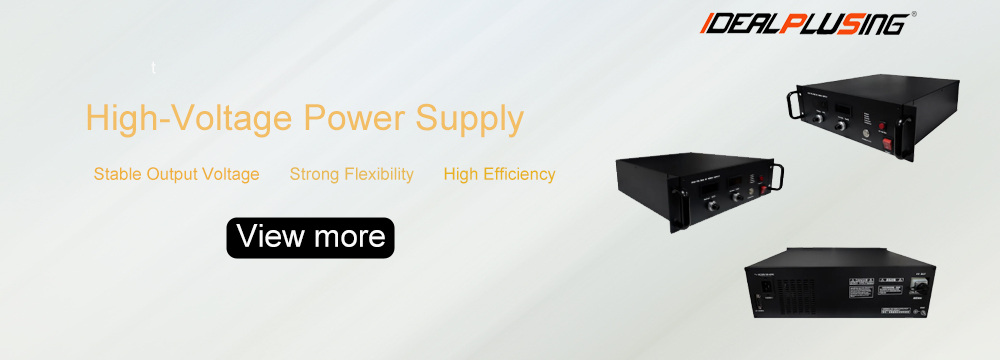
As the core power supply unit in fields such as industrial measurement and control, precision electronics, and laser equipment, high-voltage power supplies are prone to generating electromagnetic interference (EMI) signals during operation due to high-voltage inversion, high-frequency switching and other operations. These signals not only affect the output accuracy and stability of the power supply itself, but also spread outward through radiation and conduction, interfering with the normal operation of surrounding electronic components and even causing malfunctions of the entire circuit system. As one of the core means to suppress EMI, shielding technology is not a simple metal wrapping, but a targeted structural design and material selection combined with the circuit characteristics and operating frequency band of high-voltage power supplies to build an electromagnetic isolation barrier and block the propagation path of interference from the source. Compared with ordinary low-voltage power supplies, the shielding design of high-voltage power supplies needs to take into account pressure resistance, insulation and electromagnetic shielding effectiveness, and its technical details are more professional, which has also become a key link to improve the reliability of high-voltage power supply products.
1. Propagation Characteristics of Electromagnetic Interference in High-Voltage Power Supplies
EMI in high-voltage power supplies mainly originates from the high-frequency on-off of power switching tubes, magnetic leakage of high-voltage transformers and harmonic currents in rectifier circuits. Such interference signals have a wide frequency range, from tens of kHz to hundreds of MHz, and have the characteristics of strong radiation and easy conduction. Radiated interference diverges into space with the power supply as the center, which will interfere with the signal receiving end of the surrounding sensitive circuits; conducted interference propagates inside the circuit system through conductors such as power lines and ground wires, causing problems such as voltage fluctuations and current distortion.
Different from low-voltage power supplies, the high potential difference of high-voltage power supplies will greatly increase the electric field strength, making the electromagnetic coupling effect more significant, and ordinary shielding methods are difficult to achieve the desired effect. For example, between the primary and secondary of a high-voltage transformer, if the shielding layer is improperly designed, it will not only fail to block magnetic leakage, but also may cause the shielding layer to fail due to high-voltage breakdown, which instead becomes a new source of interference. Therefore, to study the adaptability of shielding technology to high-voltage power supplies, it is necessary to first clarify the uniqueness of its interference propagation, so that the shielding design can be more targeted.
2. Core Design Logic of Shielding Technology for High-Voltage Power Supplies
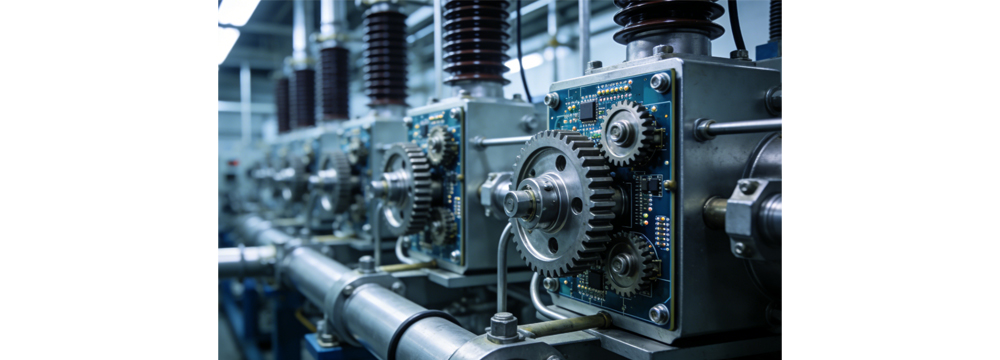
The essence of shielding technology is to use the electromagnetic induction and reflection characteristics of electromagnetic shielding materials to attenuate and block the interference field. According to the working characteristics of high-voltage power supplies, their shielding design must follow three logics: "field source isolation, path blocking, and material adaptation". First is field source isolation, which individually shields the internal interference sources of the high-voltage power supply (such as switching tubes and high-voltage transformers) to reduce the outward radiation of interference signals. This step needs to take into account the pressure resistance distance of the shielding structure to prevent high-voltage discharge; second is path blocking, which shields the input and output lines and control lines of the power supply, sets a shielding layer on the conduction path, and suppresses the propagation of conducted interference; third is material adaptation, which selects shielding materials with excellent electrical and magnetic conductivity and good insulation according to the interference frequency band and pressure resistance requirements of the high-voltage power supply to avoid the material losing its shielding effect due to high-voltage breakdown.
In actual design, the shielding of high-voltage power supplies is divided into electric field shielding and magnetic field shielding. The former is aimed at interference generated by high-voltage electric fields, and a closed shielding body is built with high-conductivity metal materials (such as red copper and aluminum foil). Using the electrostatic induction effect of the material, the electric field interference is limited to the shielding body; the latter is aimed at high-frequency magnetic field interference, using high-permeability alloy materials (such as permalloy and ferrite) to attenuate the magnetic field strength through the magnetic permeability of the material. For low-frequency magnetic field interference in high-voltage power supplies, the grounding method of the shielding body is also adopted to further improve the shielding effectiveness.
3. Key Practical Application Points of Shielding Technology for High-Voltage Power Supplies
The shielding design of high-voltage power supplies is not a single material superposition, but a systematic project combined with product structure, and several key points need to be grasped in its practical application. First, the integrity of the shielding body. The joints and openings of the shielding body are the leakage points of electromagnetic interference. For high-voltage power supplies, the joints need to be sealed with conductive gaskets, and metal shielding nets are designed at the openings according to the interference frequency band. At the same time, the mesh size of the shielding net must be much smaller than the wavelength of the interference signal to avoid interference signal leakage from the openings; second, the grounding design of the shielding layer. The electric field shielding body of the high-voltage power supply must be reliably grounded to quickly conduct the charges induced on the shielding body. The grounding resistance must be controlled within a reasonable range to prevent the shielding body from becoming a secondary radiation source due to poor grounding, while the magnetic field shielding body does not require mandatory grounding to avoid the eddy current generated by the grounding loop affecting the shielding effect; third, the combination of high-voltage insulation and shielding. A sufficient insulation distance must be reserved between the shielding layer and the high-voltage circuit, and an insulating coating can be added on the surface of the shielding material to prevent high-voltage breakdown. For example, between the shielding layer and the winding of the high-voltage transformer, a polyimide film is used as the insulating medium, taking into account both insulation and shielding properties.
In addition, the cable shielding of high-voltage power supplies is also particularly important. The input and output power lines need to use shielded cables, and the shielding layer of the cable should be grounded at one or both ends. The grounding method is selected according to the actual type of interference. For scenarios with severe high-frequency radiation interference, a metal corrugated pipe protection can be added on the outside of the shielded cable to further improve the shielding effectiveness of the cable. At the same time, the design of the shielding structure needs to consider the heat dissipation requirements of the high-voltage power supply to avoid excessive temperature inside the power supply due to too tight sealing of the shielding body, which affects the service life of the components.
4. Optimization Direction of Shielding Technology for High-Voltage Power Supplies
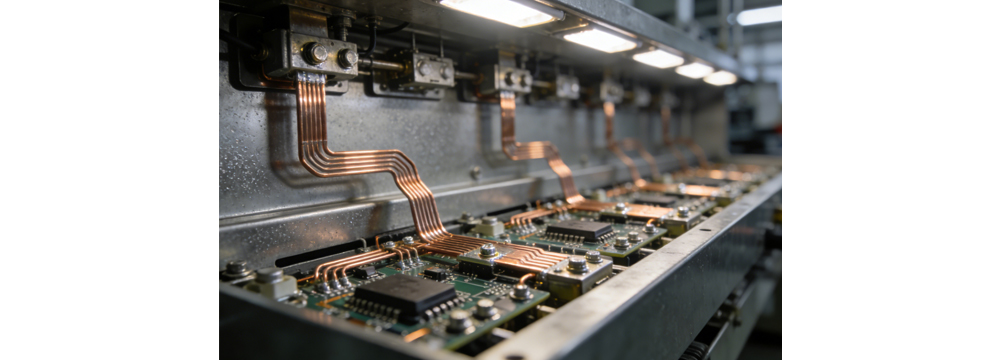
With the development of high-voltage power supplies towards miniaturization, high frequency and high precision, shielding technology also needs to be optimized and upgraded accordingly. Traditional metal shielding bodies are difficult to adapt to miniaturized high-voltage power supply products due to their large volume and heavy weight. Therefore, lightweight and thin shielding materials have become the focus of research and development, such as nano-conductive films and flexible magnetic composite materials. These materials have both excellent electromagnetic shielding performance and good flexibility, and can be flexibly attached according to the structure of the power supply, greatly saving installation space.
At the same time, in view of the coexistence of multi-band interference in high-voltage power supplies, the composite shielding structure has become a new development trend. Stacking shielding materials with different performances to build a "conductive + magnetic" composite shielding body can attenuate both electric field and magnetic field interference and improve the shielding effectiveness in a wide frequency band. In addition, the optimization of shielding design combined with simulation technology has also become the mainstream. By simulating the electromagnetic distribution inside the high-voltage power supply with electromagnetic simulation software, the interference leakage points are predicted, and the shielding structure is optimized in advance, which reduces the trial and error cost in actual debugging and makes the shielding design more scientific and accurate.
The suppression of EMI in high-voltage power supplies is a systematic problem. As the core means, the design and application of shielding technology must be closely combined with the working characteristics of high-voltage power supplies, taking into account electromagnetic shielding effectiveness, pressure resistance, insulation and product structure requirements. Under the background of the continuous upgrading of industrial intelligence and precision electronic equipment, the requirements for electromagnetic compatibility of high-voltage power supplies are getting higher and higher. The continuous optimization of shielding technology can not only improve the working stability of the high-voltage power supply itself, but also ensure the reliable operation of the entire electronic system, providing a stable power supply guarantee for the equipment upgrading in various fields.
Share our interesting knowledge and stories on social media