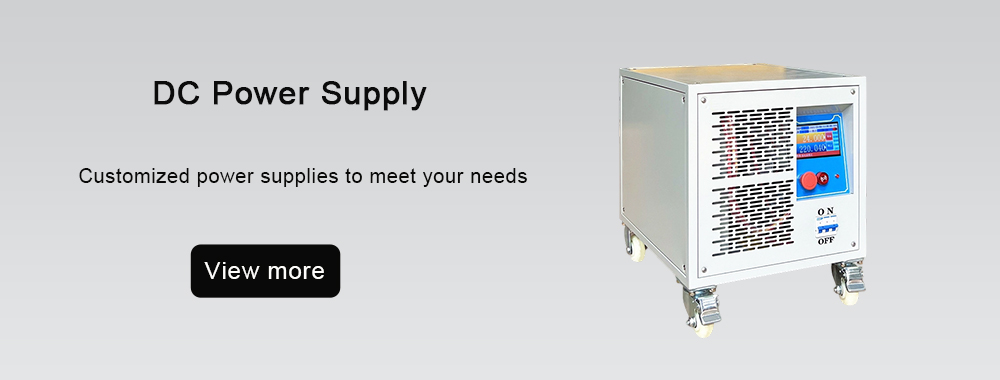
In industrial power supply, laboratory testing, and equipment maintenance scenarios, it's common to encounter situations where high-power power supplies are used with low-power devices. Many people wonder if this cross-power matching method will affect the equipment. High-power power supplies are designed to provide stable power to high-power loads. Their output characteristics and control precision are inherently different from the power requirements of low-power devices. Directly using a high-power power supply to power low-power devices is not impossible, but it will produce many explicit and implicit effects. Proper adjustment is needed to mitigate risks and ensure the power supply match better suits the actual needs of the equipment.
Output precision deviation affects the stable operation of low-power devices.
The output control precision of high-power power supplies is designed for high-power loads. Their current and voltage adjustment steps are relatively large. Facing the low-power consumption requirements of low-power devices, it is difficult to achieve precise output control. When a high-power power supply powers a low-power device, it is prone to slight fluctuations in output voltage and larger current ripple. These subtle parameter changes can interfere with the operation of precision low-power equipment, leading to instability in operation or, in severe cases, affecting the lifespan of internal components. This is the most direct impact of a high-power power supply powering a low-power device.
Increased energy consumption and higher overall electricity costs.
The inherent losses of a high-power power supply are related to its load rate. When a high-power power supply powers a low-power device, the actual load rate of the device is far lower than the rated load rate of the high-power power supply. In this case, the high-power power supply operates under light load, significantly reducing its energy conversion efficiency and increasing its reactive power loss. Simply put, when a high-power power supply powers a low-power device, it consumes more grid power to maintain operation, resulting in not only inefficient energy waste but also a continuous increase in overall electricity costs over long-term use, violating the principle of energy-saving power supply.
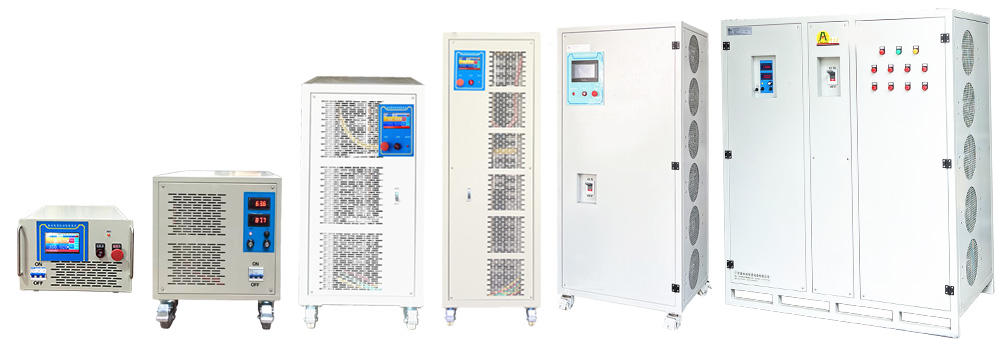
Poor adaptability of protection mechanisms poses a risk to equipment power supply.
The overcurrent and overvoltage protection mechanisms of high-power power supplies are set based on the parameters of the rated high-power load, and their protection thresholds are much higher than the tolerance range of low-power devices. When low-power devices experience faults such as short circuits or overloads, the protection mechanisms of the high-power power supply cannot be triggered in time to quickly cut off the power supply circuit. This leaves the low-power device in an abnormal power supply environment under fault conditions, exacerbating the damage to the device. This is a significant safety hazard posed by high-power power supplies powering low-power devices.
Proper adjustment can mitigate the impact and achieve safe power supply.
Not all scenarios involving high-power power supplies powering low-power devices present serious problems. Through targeted adjustment and adaptation, the probability of various problems can be effectively reduced. For example, choosing a high-power power supply with fine-tuning functions allows for adjusting output parameters to match the power requirements of low-power devices. IDEALPLUSING's high-power power supplies are equipped with multi-level fine-tuning modules, ensuring output accuracy under light load conditions and adapting to the temporary power supply needs of some low-power devices. At the same time, current-limiting and voltage-stabilizing components can be added to the power supply circuit to compensate for the performance shortcomings of high-power power supplies under light load conditions.
A high-power power supply driving low-power equipment does have impacts on output accuracy, energy consumption losses, protection mechanisms and other aspects, and it is not the optimal power supply matching method. If it is for temporary emergency use, risks can be avoided through fine debugging and accessory adaptation; if it is for long-term power supply needs, it is still necessary to select a power supply product matching the equipment power. Only when the output characteristics of the power supply are highly consistent with the power demand of the equipment can we not only ensure the stable operation of the equipment, but also realize the efficient utilization of electric energy.
IDEALPLUISNG Power Expert:
We focus on the research and development, sales and services in the fields of DC-DC power modules, AC-DC rectifier modules, DC-AC inverters, AC power supplies, DC power supplies, LED power supplies, chargers, rectifier systems, etc., providing personalized, efficient, reliable and cost-effective power solutions for all walks of life.
Thank you for considering our services.