
In the testing of power electronic equipment and the power supply of special power applications, a frequency converter power supply is a specialized power device that combines power conversion and frequency regulation. Unlike ordinary mains power and regulated power supplies, it can adjust the frequency, voltage, and other parameters of the output power according to actual needs, adapting to different power systems and operating conditions. The application of frequency converter power supplies covers niche scenarios such as industrial testing, marine engineering, and scientific research experiments. Its customized power output characteristics allow for precise satisfaction of non-standard frequency power requirements. Many people's understanding of frequency converter power supplies is limited to "frequency adjustment." Today, we will break down the definition and core components of a frequency converter power supply to understand the core structure of this specialized power supply.
What is a frequency converter power supply?
A frequency converter power supply is a power conversion device that converts fixed-frequency, fixed-voltage mains power into adjustable-frequency, adjustable-voltage alternating current. Its core function is to simulate the power environment of different power grid systems, providing adaptable power for various devices that require non-standard frequency power supply. A frequency converter is not simply a frequency regulator; while converting frequencies, it ensures the waveform and accuracy of the output power remain stable, preventing power quality degradation due to frequency adjustments.
In practical applications, frequency converters can adapt to common grid frequencies such as 50Hz and 60Hz, and can also output power in special frequency bands to meet the needs of scenarios such as imported equipment testing, motor frequency conversion experiments, and shore power supply for ships. The power output of a frequency converter features high precision and low harmonics. Even for precision instrument testing with stringent power quality requirements, frequency converters can provide stable power supply support, which is why they have become core equipment in the fields of special power supply and equipment testing.
Core Components of a Frequency Converter
1. Rectifier and Filter Unit
The rectifier and filter unit is the core of the frequency converter's front end. It is mainly responsible for converting AC power from the mains into DC power and eliminating noise and ripple in the current through filter circuits, providing clean DC power for subsequent frequency conversion. This unit is fundamental to the inverter power supply's energy conversion. Its filtering effect directly impacts the final output power quality and is crucial for preventing waveform distortion.
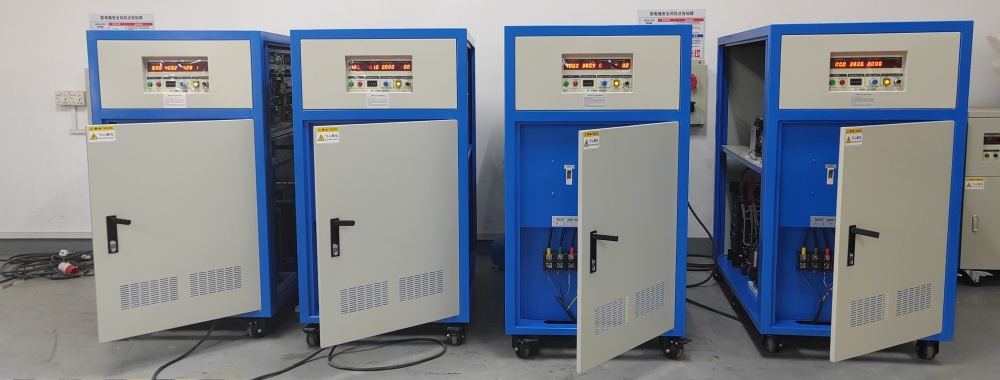
2. Inverter Unit
The inverter unit is the core component for frequency regulation in an inverter power supply. It converts the rectified and filtered DC power back into AC power, and precisely adjusts the output frequency and voltage of the AC power through internal switching devices and control modules. The performance of the inverter unit determines the frequency regulation range and accuracy of the inverter power supply. A high-quality inverter power supply can achieve continuous fine-tuning of the frequency, adapting to a wider range of operating conditions.
3. Control and Detection Unit
The control and detection unit is the "brain" of the inverter power supply. Composed of a microprocessor, detection sensors, and other components, it is responsible for real-time regulation of the inverter unit's operating status and monitoring parameters such as output voltage, frequency, and current. If any parameters deviate from the set values, it will make timely adjustments. This unit enables automated parameter control and fault protection, ensuring the stability and safety of the inverter power supply's operation.
4. Output Filtering Unit
The output filtering unit is the final component of the frequency converter power supply. Its main function is to perform secondary filtering on the AC power output from the inverter unit, eliminating harmonic interference generated during frequency conversion. This ensures that the final output waveform of the frequency converter power supply is closer to a standard sine wave, meeting the power requirements of precision equipment.
The various components of the frequency converter power supply work together to achieve flexible frequency and voltage control and high-quality power output. For example, IDEALPLUSING frequency converter power supplies, thanks to the precise matching design of their components, demonstrate excellent adaptability in industrial equipment testing and special-purpose power supply scenarios. Overall, a frequency converter power supply is a precision power device integrating rectification, inversion, regulation, and filtering. The coordinated work of its components makes precise power supply at non-standard frequencies possible and provides reliable power solutions for various special-purpose power applications and equipment testing scenarios.
IDEALPLUISNG Power Expert:
We focus on the research and development, sales and services in the fields of DC-DC power modules, AC-DC rectifier modules, DC-AC inverters, AC power supplies, DC power supplies, LED power supplies, chargers, rectifier systems, etc., providing personalized, efficient, reliable and cost-effective power solutions for all walks of life.
Thank you for considering our services.