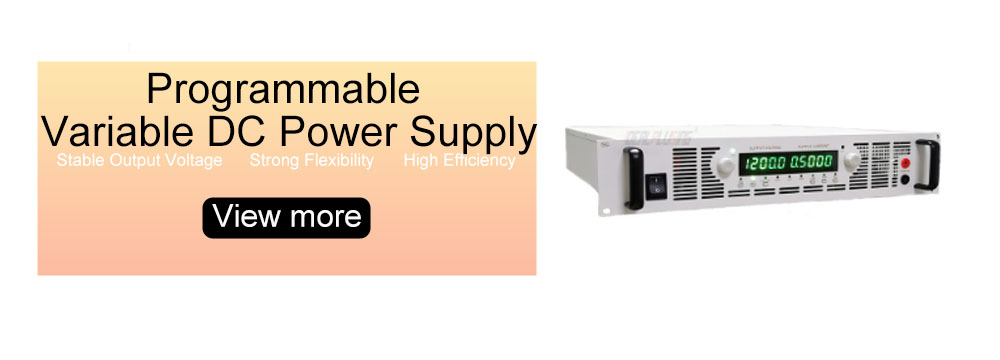
In many fields such as electronic R&D, industrial production and experimental testing, adjustable DC power supplies are indispensable basic power supply equipment. They can convert alternating current into continuously adjustable direct current, providing stable and controllable electrical energy support for different loads. Faced with a wide range of adjustable DC power supplies on the market, how to select a suitable model based on your own needs and avoid parameter waste or insufficient performance is a practical problem faced by many users. From four dimensions of application scenarios, core parameters, type differences and detailed configurations, this article shares practical selection ideas for adjustable DC power supplies to help you quickly find the right equipment.
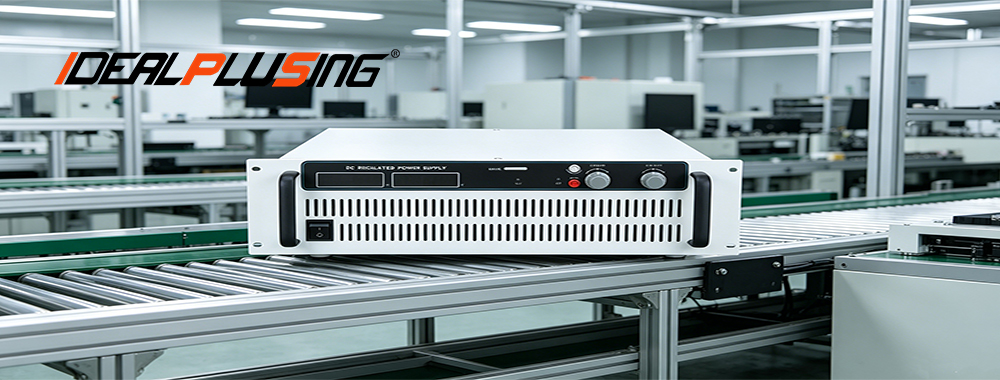
1.Clarify Basic Requirements for Adjustable DC Power Supplies Based on Application Scenarios
The core premise of selection is to first clarify the specific application scenarios of the adjustable DC power supply. The requirements for power, accuracy and stability of adjustable DC power supplies vary significantly in different scenarios.
In daily electronic maintenance and hobbyist operation scenarios, adjustable DC power supplies are mostly used for debugging small circuit boards and testing common electronic components, with a focus on portability and ease of operation. There is no need to pursue high power in this case. An adjustable DC power supply with a voltage of 0-30V and a current of 0-5A is sufficient. Such models are small in size and affordable, meeting basic power supply and debugging needs.
In scientific research laboratory and precision R&D scenarios, adjustable DC power supplies are required to focus on high precision and low ripple. Work such as semiconductor device testing, sensor calibration and precision circuit debugging requires adjustable DC power supplies to provide stable output voltage with small fluctuations, avoiding experimental data inaccuracy caused by voltage drift or noise interference. Such scenarios are suitable for high-precision numerically controlled adjustable DC power supplies, which support precise parameter adjustment and real-time data monitoring.
In industrial production and high-power application scenarios, such as power supply for automated production lines, electroplating and electrolysis, and motor testing, adjustable DC power supplies are required to have high-power output, strong load capacity and stable heat dissipation performanceIDEALPLUSING. In industrial environments, there are often voltage fluctuations, dust, high temperature and other conditions. Adjustable DC power supplies need to have multiple protection functions such as overvoltage, overcurrent and short circuit protection to adapt to long-term continuous operation conditions.
2.Focus on Core Parameters to Control Key Performance of Adjustable DC Power Supplies
After determining the scenario, it is necessary to focus on verifying the core parameters of the adjustable DC power supply, which is the core basis for judging whether the equipment performance meets the standards. The core parameters mainly include output range, accuracy, ripple and protection functions.
The output voltage and current range is a basic indicator. It is advisable to reserve a margin of about 20% during selection to avoid affecting the service life of the adjustable DC power supply due to full-load operation. For example, if the actual load demand is 24V/10A, an adjustable DC power supply of 0-30V/0-15A can be selected, which can not only meet the demand, but also cope with small load fluctuations. At the same time, it is necessary to distinguish between rated power and peak power. Priority should be given to models with rated power meeting the demand to prevent equipment failure caused by long-term peak operation.
Accuracy and stability directly affect power supply quality, mainly including voltage regulation accuracy, current regulation accuracy and load regulation rate. High-quality adjustable DC power supplies can have a voltage regulation accuracy of ±0.1% and a load regulation rate of ≤0.03%, maintaining stable output in case of input voltage fluctuations or load changes. High-precision scenarios need to focus on this indicator, while ordinary scenarios can relax the requirements appropriately.
Ripple and noise are easily overlooked key parameters. Excessive ripple will interfere with the operation of precision equipment. Adjustable DC power supplies are divided into linear and switching types. Linear adjustable DC power supplies have lower ripple, which can be as low as millivolt level, suitable for precision scenarios; switching adjustable DC power supplies have higher efficiency and less heat generation, with relatively higher ripple, suitable for industrial high-power scenarios. For daily selection, an adjustable DC power supply with a ripple of less than 50mV is sufficient for general scenarios.
Protection functions are the guarantee for the safe operation of adjustable DC power supplies. Basic functions need to include overvoltage, overcurrent, short circuit and overheating protection to avoid equipment damage caused by misoperation or load abnormalities. Industrial-grade adjustable DC power supplies can also pay attention to reverse connection protection, power limit and other functions to improve safety in use. Some high-quality brands such as IDEALPLUSING have well-designed protection functions for their adjustable DC power supplies, adapting to safe use in multiple scenarios.
3.Distinguish Power Supply Types to Match Adaptation Solutions for Adjustable DC Power Supplies
Adjustable DC power supplies on the market are mainly divided into linear and switching types. Each has its own advantages and disadvantages, adapting to different application scenarios, and trade-offs need to be made according to actual needs during selection.
The core advantages of linear adjustable DC power supplies are strong stability, low ripple noise and fast transient response. They adjust voltage through linear voltage regulation principles with small output interference, suitable for scenarios requiring high power supply quality such as laboratory precision testing and audio equipment power supply. However, linear adjustable DC power supplies have low efficiency, large heat generation, large size and weight, and are not suitable for long-term high-power operation scenarios.
Switching adjustable DC power supplies adopt PWM modulation technology, featuring high efficiency, small size and light weight. Their conversion efficiency can reach more than 85% with less heat generation, suitable for scenarios such as industrial production line power supply, high-power equipment power supply and outdoor mobile testing. With technological upgrades, the ripple control of some high-end switching adjustable DC power supplies is close to linear models, balancing efficiency and stability.
4.Pay Attention to Detailed Configurations to Improve User Experience of Adjustable DC Power Supplies
In addition to core performance, detailed configurations affect the practicality and durability of adjustable DC power supplies, which cannot be ignored during selection.
In terms of operation and display, priority should be given to adjustable DC power supplies with digital displays, which can view voltage and current values in real time with accurate and intuitive readings. Some models support parameter storage and one-key recall functions, adapting to scenarios requiring frequent parameter switching and improving operation efficiency.
Heat dissipation and structural design affect the long-term operation stability of adjustable DC power supplies. Industrial-grade models need to have a good heat dissipation structure, such as temperature-controlled fans and heat sinks, to avoid output drift or protection triggering caused by high temperature. At the same time, attention can be paid to the body material and size. Compact and portable models are suitable for desktop scenarios, and standard-size models are suitable for rack installation scenarios, adapting to installation spaceIDEALPLUSING.
In terms of interfaces and extended functions, basic output interfaces are sufficient for ordinary scenarios; for automated testing or remote control scenarios, adjustable DC power supplies with communication interfaces such as RS485 and USB can be selected, supporting remote control and data transmission, adapting to system integration needs.
Conclusion
The selection of adjustable DC power supplies is essentially an accurate match between scenario requirements and equipment performance. There is no need to blindly pursue high parameters, nor can we ignore quality by only focusing on low prices. Starting from application scenarios, clarify power and accuracy requirements, focus on core parameters such as output range, ripple and protection functions, reasonably select linear or switching adjustable DC power supplies, and pay attention to detailed configurations. Then you can select a suitable model. Whether it is laboratory precision testing, industrial production power supply or daily electronic debugging, a suitable adjustable DC power supply can work stably, providing reliable power support for various electricity scenarios.