Introduction
Within the technological domains of complex industrial automation frameworks, electrochemical energy storage systems (ESS), and advanced power electronic topologies, the power supply unit (PSU) serves as the primary electrical and thermodynamic nucleus. Consequently, it functions as the critical foundation that dictates the overarching operational integrity and stability of the entire systemic architecture.
Concurrently, a prevalent limitation in contemporary hardware engineering methodologies is the tendency to restrict the component selection phase exclusively to baseline steady-state parameters, specifically nominal voltage and current ratings. This systemic omission of multi-dimensional transient and environmental boundary conditions routinely precipitates catastrophic, non-linear field failures; such structural vulnerabilities typically manifest during dynamic operations as localized thermal runaway or irreversible dielectric breakdown within critical sub-components.
To address these engineering vulnerabilities and mitigate empirical failure rates, this treatise provides a rigorous deconstruction of eight latent yet deterministic critical parameters. The systematic evaluation of these underlying metrics establishes a high-fidelity analytical framework, which is indispensable to guarantee prolonged operational reliability and robust failure-immunity during long-term field deployment.
1. Input Voltage Range & Transient Tolerance
Industrial power distribution networks are highly susceptible to severe voltage anomalies, including periodic fluctuations, transient sags, and destructive surges. Consequently, specifying a power conversion apparatus characterized by a constrained steady-state input window invariably accelerates premature degradation and catastrophic failure of the front-end rectification stage. Hardware design engineers must rigorously evaluate the operational boundary limits under steady-state conditions—specifically quantifying parameters such as 85–264 VAC for universal utility lines, or 200–800 VDC within high-voltage architectural systems—while simultaneously verifying the empirical transient tolerance thresholds, such as the capacity to withstand an overvoltage stress of 300 VAC for a temporal duration of 5 seconds. Furthermore, the systematic integration of an active Power Factor Correction (PFC) subsystem is mathematically and operationally imperative to dynamically mitigate and compensate for non-linear, distorted grid waveforms.
2. Output Ripple and Noise (PARD)
Periodic and Random Deviation (PARD) directly impacts the signal integrity of downstream microcontrollers and analog circuits. Industrial environments require evaluation of high-frequency noise spikes up to 20 MHz bandwidth. Look for supplies utilizing low-ESR polymer capacitors and multi-stage LC filters to keep ripple below 1% Vout peak-to-peak.
3. Efficiency Profile & Light-Load Performance
Peak efficiency (e.g., 94% at full load) is a vanity metric if the power supply operates primarily at 20% load where efficiency might drop drastically. For systems with variable duty cycles, analyze the entire efficiency curve. High-efficiency topologies like LLC resonant converters and synchronous rectification ensure minimum heat dissipation across all load ranges.
Table 1. Technical Data Reference
Parameter | Specification | Target Application |
Input Window | 3-Phase 380V-480VAC ±15% / 200-800VDC | Heavy Industrial / High-Voltage ESS |
PARD (Ripple & Noise) | < 120mV (for 24VDC output) | Sensitive Analog Control Loops |
Peak Efficiency | 95.5% (Flat curve from 30% to 100% load) | Green Energy & High-Density Systems |
Isolation Strength | 4000VAC Input to Output (Reinforced) | Medical & High-Voltage Grid Tie |
Operating Temp | -40℃ to +70℃ (Derating above 50℃) | Harsh Outdoor Environment |
4. Isolation Voltage & Topology
Operational safety compliance and electromagnetic noise immunity demand the implementation of rigorous galvanic isolation mechanisms within power conversion architectures. Consequently, high-voltage industrial-grade infrastructures necessitate the integration of reinforced insulation barriers, which typically must quantify a dielectric withstand capability of 4000 VAC or greater spanning from the input ports to the output terminals. Furthermore, the strategic selection of the core switching topology—specifically evaluated through a comparative analysis of Phase-Shifted Full-Bridge (PSFB) architectures versus Resonant LLC configurations—directly dictates the system's efficacy in mitigating and decoupling parasitic capacitance interferences. By effectively controlling these parasitic pathways, the selected topology establishes a robust defense mechanism, thereby protecting low-voltage control-loop stages from the intrusion of highly destructive high-voltage transient surges.
5. Thermal Management & Derating Curves
Never trust a wattage rating without looking at the thermal derating curve. A power conversion apparatus with a nominal rating of 1000W may exhibit a restricted power delivery capability, truncated to merely 500W, when subjected to an elevated ambient operating temperature of 60℃. Consequently, design engineers must quantitatively evaluate the empirical thermal derating slope, which is frequently parameterized by a linear reduction matrix such as a 2.5% capacity decrease per degree Celsius exceeding the 50℃ threshold baseline. Furthermore, it is critical to rigorously investigate whether the specified power density metrics are fundamentally dependent upon active forced air cooling mechanisms, requiring explicit volumetric airflow rates quantified in Cubic Feet per Minute (CFM). Conversely, the system verification must determine if the thermal management paradigm relies entirely upon passive natural convection regimes to maintain thermodynamic equilibrium.
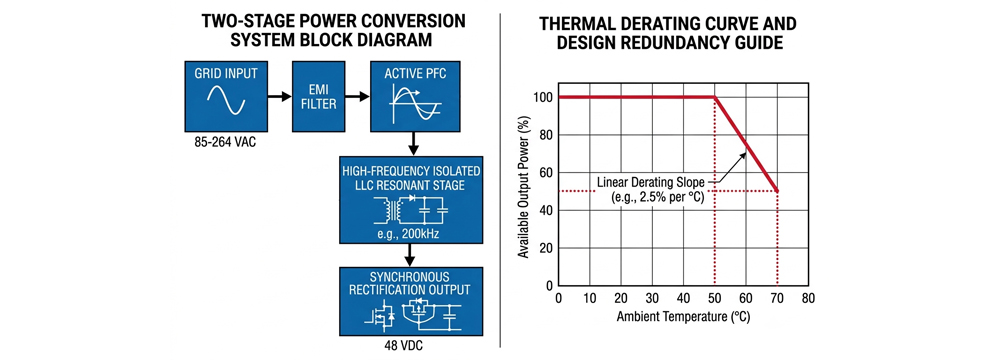
Figure 1. Schematic Layout & Thermal Visualization
6. Electromagnetic Compatibility (EMI/EMC) Margins
Compliance with CE or FCC (such as CISPR32/EN55032 Class B) is standard, but professional engineers look for the design margin. A power supply that passes EMI with only a 1dB margin will likely fail when integrated into a complex system with lengthy cabling. Seek at least a 4dB to 6dB margin for conducted and radiated emissions.
7. Core Component Lifetime & MTBF
The metric of Mean Time Between Failures (MTBF) represents a strictly statistical figure derived from standardized mathematical estimation models. However, the empirical operational lifetime exhibited during actual field deployment is predominantly dictated by the weakest bottleneck within the physical system architecture. Specifically, this critical vulnerability is localized within the output stage electrolytic capacitors. According to the thermodynamic principles delineated by Arrhenius' Law, every incremental acceleration of 10℃ in the capacitor's core thermal profile induces a exponential twofold truncation of its remaining useful life. Consequently, hardware specification protocols must mandate that vendors integrate premium-grade, 105℃-rated, extended-durability capacitors, such as those specified with a baseline endurance of 10,000 operational hours. Implementing such stringent component-level criteria is indispensable to mitigate the risk of premature electrolyte dry-out phenomena, thereby preventing subsequent catastrophic failure modes.
8. Protection Mechanisms & Recovery Modes
When a fault occurs (Overvoltage OVP, Overcurrent OCP, Overtemperature OTP, Short-circuit SCP), how does the supply react? For critical industrial loads, a "Hiccup Mode" or "Auto-recovery" is often preferred to prevent absolute downtime. However, for specific inductive or capacitive heavy-duty loads, a "Constant Current Latch" mode may be required to successfully kickstart the system without triggering false trips.
Need custom bidirectional isolation topologies? Power supply design demands absolute precision for extreme scenarios. Submit your electrical parameters to our senior engineering team for a free assessment. Let us deliver an optimized, industry-compliant solution for your specific project.
Conclusion
Selecting an industrial power supply requires checking more than just basic V/A output requirements. By deep-diving into these 8 parameters—particularly thermal derating, ripple control, and lifetime calculation—you secure your system against unpredictable industrial field environments.