
Aircraft Ground Power Units (GPUs) play an important role in modern airport operations. When an aircraft is parked at an airport gate, maintenance hangar, or apron, its electrical systems may still need power even when its engines are not running.
Avionics checks, cabin lighting, cockpit preparation, maintenance inspections, and other ground activities require a suitable electrical supply. Instead of relying continuously on the aircraft's Auxiliary Power Unit (APU), airport operators can connect an external Aircraft Ground Power Unit to provide electricity directly from the ground.
For airlines, airport ground-handling companies, aircraft maintenance organizations, and aerospace equipment integrators, selecting the right ground power solution involves more than supplying electricity. Output compatibility, power quality, operating reliability, energy consumption, and equipment integration all influence daily operations.
So, why do aircraft need external ground power during airport operations, and how does a Ground Power Unit support more efficient aircraft servicing?
1. Industry Pain Points: Why Is External Ground Power Necessary?
Aircraft require electrical power for many activities while parked. However, operating onboard power generation equipment throughout every ground activity may not be the most practical approach.
External ground power helps address several operational challenges.
1.1 Reducing Unnecessary APU Operation
An Auxiliary Power Unit is a small onboard turbine engine that can supply electrical power and, depending on the aircraft configuration, pneumatic power.
Although the APU is essential for many aircraft operations, running it during every ground activity can consume fuel and generate exhaust emissions and noise.
An external GPU provides another source of electrical power when the aircraft and operating procedures permit its use.
By reducing unnecessary APU operating hours, airlines may also reduce associated fuel consumption, operating costs, and maintenance exposure. Actual savings depend on aircraft type, APU fuel consumption, ground time, electricity source, and local operating conditions.
1.2 Supporting Aircraft Turnaround Operations
Airport turnaround involves multiple activities between aircraft arrival and departure.
During this period, aircraft systems may need electrical power for:
· Cockpit preparation
· Avionics and communication checks
· Cabin lighting and electrical systems
· Ground maintenance inspections
· Pre-flight procedures
· Approved equipment testing
A suitable external power connection allows these activities to proceed without requiring continuous APU operation solely for electrical supply.
1.3 Maintaining Power Compatibility
Aircraft electrical systems have specific voltage, frequency, phase, and connection requirements.
Many conventional aircraft ground-power applications use 115/200V three-phase AC at 400Hz. Some applications also require 28V DC power.
A conventional 50Hz or 60Hz utility supply cannot directly satisfy a 400Hz aircraft interface without appropriate power conversion.
The ground power equipment must therefore provide electrical characteristics compatible with the connected aircraft.
1.4 Managing Airport Operating Costs
Fuel consumption, equipment maintenance, noise management, and ground-service coordination all contribute to airport operating costs.
External ground power can help reduce reliance on onboard APU operation during suitable ground activities.
For airports handling multiple aircraft simultaneously, the availability of appropriately configured fixed or mobile GPU equipment can also support more organized ground-service operations.
2. Working Principle: How Does an Aircraft Ground Power Unit Work?
An Aircraft Ground Power Unit receives electrical energy from an available source and delivers power that matches the aircraft's ground-power requirements.
Different GPU architectures use different conversion methods, but static electronic systems commonly follow several stages.
Step 1: Receiving Input Power
The GPU receives electrical power from an airport utility connection, fixed ground-power infrastructure, or another suitable source.
The input may be supplied at 50Hz or 60Hz, depending on the installation.
Before operation, the equipment must be compatible with the available input voltage, phase configuration, frequency, and current capacity.
Step 2: Power Conversion
For a static 400Hz GPU, an electronic conversion system processes the incoming power.
A typical conversion architecture includes:
· Rectification to convert AC input into DC
· A DC-link stage for intermediate energy processing
· An inverter to generate the required AC output
· Output filtering and regulation
This allows conventional utility-frequency electricity to be converted into controlled 400Hz AC power.
Step 3: Voltage and Frequency Regulation
The control system monitors the output and regulates voltage and frequency according to the GPU's specified operating limits.
This is important because aircraft electrical equipment requires a compatible power supply during normal operation and changing load conditions.
Relevant performance parameters include voltage regulation, frequency stability, harmonic distortion, and transient response.
Step 4: Delivering Power to the Aircraft
After the required output conditions are established, the GPU supplies electricity through the appropriate ground-power cables and aircraft connectors.
Common aircraft ground-power configurations include:
Output Type | Typical Electrical Configuration | Application |
AC Ground Power | 115/200V, three-phase, 400Hz | Aircraft electrical systems and ground maintenance |
DC Ground Power | 28V DC | Aircraft DC systems and applicable ground-support requirements |
These are common configurations, not universal specifications. Actual requirements must be confirmed using the aircraft manufacturer's documentation and applicable ground-power interface standards.
ISO 6858:2017 provides general requirements for aircraft ground-support electrical supplies, including electrical output characteristics and aircraft interface requirements.
Step 5: Monitoring and Protection
A suitable GPU should incorporate protection and monitoring functions appropriate to its design.
These may include:
· Over-voltage protection
· Under-voltage protection
· Over-frequency and under-frequency protection
· Overload protection
· Over-temperature protection
· Emergency shutdown functions
The exact protection configuration should be verified against the product documentation and project requirements.
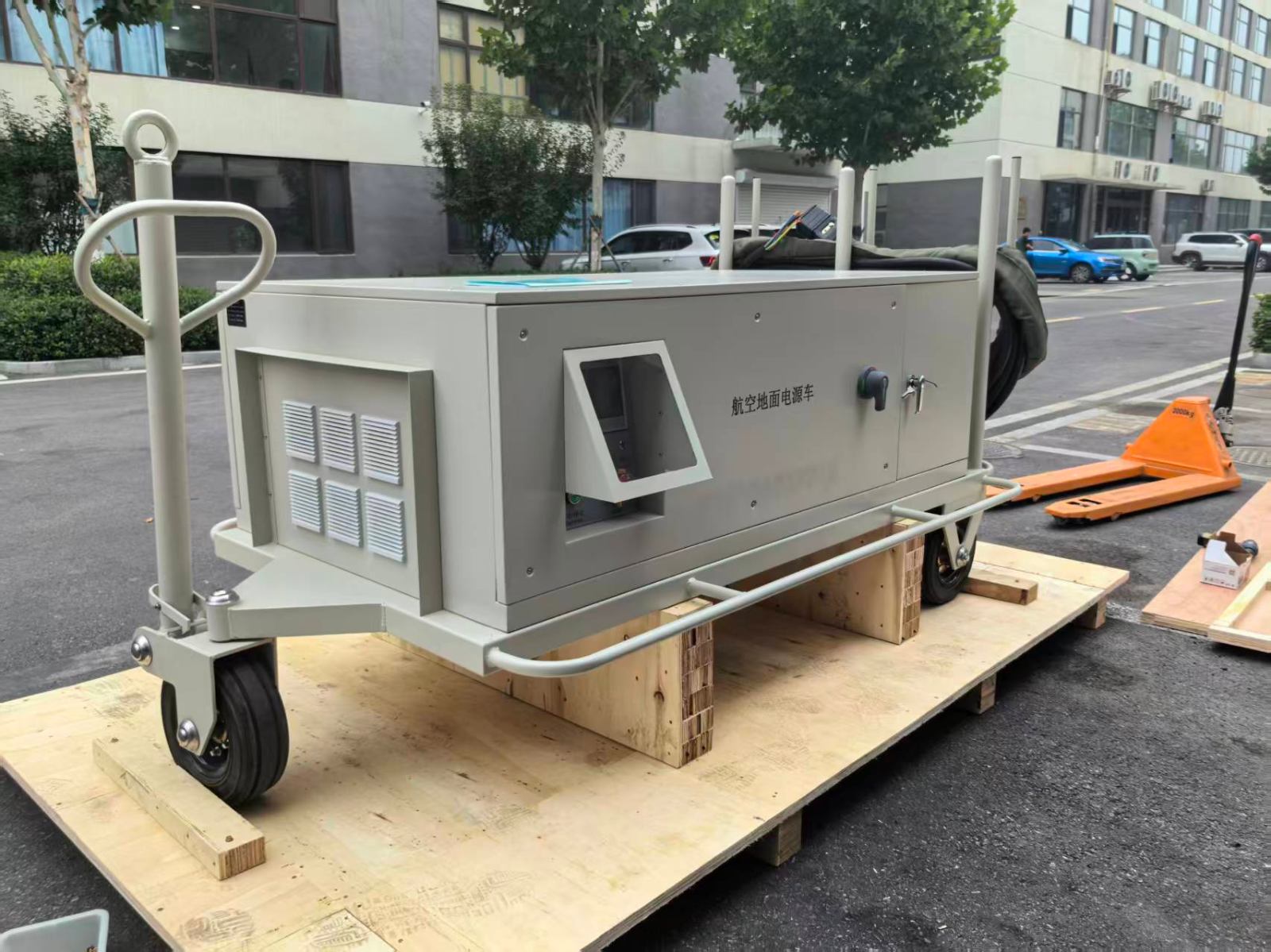
3. Selection Guide: How to Choose the Right Aircraft Ground Power Unit
Choosing an aircraft ground power unit requires a clear understanding of the aircraft interface, operating environment, and expected electrical demand.
The following factors provide a practical starting point.
Selection Factor | What to Confirm | Why It Matters |
Output voltage | 115/200V AC or other required configuration | Ensures electrical compatibility |
Output frequency | 400Hz or specified alternative | Matches aircraft requirements |
DC output | Whether 28V DC is required | Supports applicable DC loads |
Rated power | Required kVA and load profile | Prevents insufficient capacity |
Power quality | Voltage regulation, frequency regulation, THD | Supports compatible operation |
Input power | 50Hz/60Hz, voltage, and phase | Ensures installation compatibility |
Protection | Overload, over-voltage, and thermal protection | Supports operational safety |
Installation | Fixed, mobile, or trailer-mounted | Matches airport infrastructure |
Environment | Temperature, humidity, dust, and ventilation | Supports reliable operation |
Maintenance | Diagnostics, documentation, and service access | Supports lifecycle management |
Static GPU vs. Engine-Driven GPU
Airport operators generally evaluate different GPU configurations according to their infrastructure and operational requirements.
Comparison | Static GPU | Engine-Driven GPU |
Energy source | External electrical supply | Onboard generator driven by an engine |
Power conversion | Electronic conversion | Generator-based electrical generation |
Exhaust emissions at point of use | No local engine exhaust from the GPU | Engine exhaust during operation |
Noise | Generally lower operating noise | Engine noise requires consideration |
Mobility | Fixed or mobile configurations | Commonly mobile or vehicle-mounted |
Maintenance | Power electronics and cooling systems | Engine, generator, and electrical systems |
Best evaluation focus | Available utility power, efficiency, and installation | Mobility, fuel supply, operating duration, and maintenance |
The choice depends on airport infrastructure, aircraft servicing patterns, available electrical capacity, and operational requirements. Neither configuration should be considered universally suitable.
4. Technical Solution: What Should a Reliable Ground Power System Provide?
For aerospace ground-support applications, the main objective is to deliver compatible electrical power under defined operating conditions.
A technical evaluation should focus on several areas.
Electrical compatibility
The GPU should match the required output voltage, frequency, phase configuration, rated power, and applicable DC output requirements.
Power quality
Engineers should review voltage regulation, frequency regulation, harmonic distortion, and transient response. These parameters help determine whether the equipment can support the connected aircraft loads within the specified limits.
Protection and control
Monitoring, fault detection, overload protection, and emergency shutdown functions should be evaluated as part of the system design.
Mechanical and environmental design
For mobile airport applications, equipment dimensions, cable management, enclosure protection, ventilation, temperature range, and mobility requirements are also important.
Testing and documentation
Before purchasing, buyers should request technical datasheets, electrical drawings, applicable test reports, operating manuals, and relevant compliance documentation.
At IDEALPLUSING, aircraft ground power requirements should be assessed according to the actual application and confirmed product capabilities. For projects requiring customized power configurations, engineers should first define the input supply, output voltage, frequency, power rating, installation conditions, and interface requirements.
Contact the IDEALPLUSING engineering team to discuss your application and identify the technical information required for a preliminary evaluation. You can also request available product datasheets and technical documentation to support your supplier comparison.
5. Application Case: External Ground Power During Aircraft Turnaround
Consider a commercial airport handling aircraft arrivals and departures throughout the day.
After an aircraft reaches its assigned gate, ground crews need to prepare the aircraft for its next operation. During this period, electrical power may be required for cockpit preparation, cabin systems, approved maintenance checks, and other ground procedures.
Without an appropriate external power source, the aircraft may need to rely on its APU for some of these activities.
A suitable GPU provides an alternative electrical supply.
The operational process typically involves:
1. Aircraft arrival: The aircraft parks at the designated gate or apron position.
2. Power requirement confirmation: Ground crews confirm the aircraft's required voltage, frequency, phase, and connector configuration.
3. GPU connection: An approved fixed or mobile GPU is positioned and connected according to airline procedures.
4. Power supply: The GPU provides the required electrical output for authorized ground activities.
5. Ground preparation: Maintenance and turnaround tasks proceed using the external electrical source where permitted.
6. Disconnection: The GPU is switched off and disconnected following the applicable operating procedures before aircraft departure.
For example, an installation designed around a 115/200V, three-phase, 400Hz aircraft interface must provide compatible electrical output throughout the required operating conditions.
If the aircraft also requires 28V DC, the ground-support configuration must include an appropriate DC supply.
The potential operational benefits include reduced APU operating hours, lower local emissions from APU operation, reduced ground noise, and improved coordination of ground electrical services.
However, the actual fuel, cost, and emissions savings depend on measured APU operating time, aircraft-specific consumption data, GPU energy consumption, and the electricity source.
For airport operators planning a new installation, recording these baseline values provides a more reliable way to evaluate the operational and financial benefits of external ground power.
External ground power is an important part of modern aircraft ground support.
By providing electricity while aircraft are parked, Aircraft Ground Power Units help support maintenance, pre-flight preparation, avionics checks, and other approved ground activities without requiring continuous APU operation solely for electrical power.
For airport operators, airlines, maintenance organizations, and aerospace equipment integrators, the right GPU should match the aircraft's electrical interface, load requirements, power quality expectations, and installation conditions.
A clear technical specification also makes supplier evaluation, equipment integration, and long-term maintenance planning more effective.
If your project requires an aircraft ground power solution, contact IDEALPLUSING to discuss your input conditions, output voltage, frequency, power rating, and application requirements. Request the available technical documentation or submit your project specifications for a preliminary engineering review and quotation.