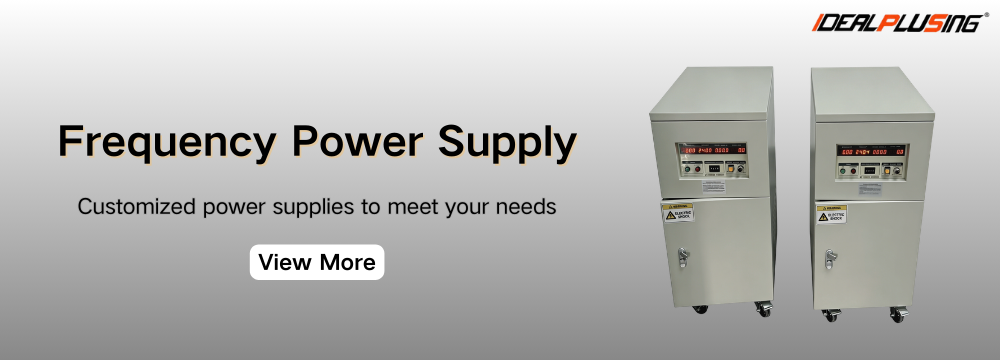
In industrial power supply, equipment testing and laboratory scenarios, variable frequency power supply and voltage regulator are both common power conditioning devices. Many users struggle with the differences between variable frequency power supply and voltage regulator when purchasing, and are unsure which better suits their needs. This article objectively analyzes from the perspectives of function, application and cost-performance, helping you rationally judge the selection direction of variable frequency power supply and voltage regulator.
Core Functional Differences Between Variable Frequency Power Supply and Voltage Regulator
Variable frequency power supply and voltage regulator have obvious differences in working logic and effect. Voltage regulator mainly focuses on voltage regulation, changing output voltage through winding switching or carbon brush sliding. It cannot adjust frequency, and its output waveform follows the mains supply with limited stability and purity, only meeting basic voltage adaptation needs. Variable frequency power supply adopts AC-DC-AC conversion architecture, realizing independent regulation of voltage and frequency simultaneously, outputting stable and pure sine wave without being affected by grid fluctuations, performing better in voltage stabilization, frequency stabilization and anti-interference. The most intuitive gap between variable frequency power supply and voltage regulator is that variable frequency power supply can take into account both voltage regulation and frequency conversion, while voltage regulator can only realize single voltage regulation function.
Practical Application Scenarios of Variable Frequency Power Supply
The application of variable frequency power supply covers many fields with high requirements for power quality, which is an important advantage distinguishing it from voltage regulator. In export equipment testing, variable frequency power supply can simulate grid standards of different countries, meeting the needs of 50Hz/60Hz switching and multi-voltage level output to ensure product testing compliance. Scenarios such as precision instruments, motor testing and aviation intermediate frequency power supply rely on the low harmonic and high stable output of variable frequency power supply to avoid test errors or equipment damage caused by waveform interference. In industrial production lines, new energy testing, aging tests and other scenarios, variable frequency power supply can provide continuously stable adjustable power, improving test accuracy and equipment operation safety. In these scenarios, voltage regulator cannot replace variable frequency power supply due to functional limitations, and variable frequency power supply has stronger comprehensive practicability.
Purchase Suggestions for Variable Frequency Power Supply and Voltage Regulator
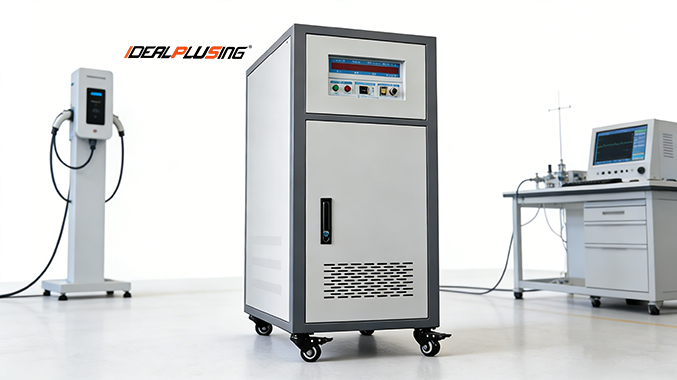
If you have a limited budget, only need simple voltage regulation under fixed frequency, and have low requirements for waveform and stability, you can choose voltage regulator, which has lower cost, simple structure and convenient maintenance. If you need frequency conversion, voltage stabilization and pure waveform for export testing, precision experiments, imported equipment adaptation and other scenarios, give priority to variable frequency power supply. For long-term use, users focusing on equipment protection and test accuracy, variable frequency power supply has higher comprehensive value, which can reduce replacement and failure costs in later period. For variable frequency power supply pursuing stability, reliability and balanced performance, you can pay attention to products of IDEALPLUSING, which perform well in output accuracy and durability.
Summary
There is no absolute advantage or disadvantage between variable frequency power supply and voltage regulator, only differences in scenario adaptability. Choose voltage regulator for simple basic voltage regulation, and prioritize variable frequency power supply for integrated functions of voltage regulation, frequency conversion and voltage stabilization. Judging comprehensively combined with usage scenarios, accuracy requirements and long-term costs, you can select the more worthwhile equipment to make power regulation more stable and efficient.