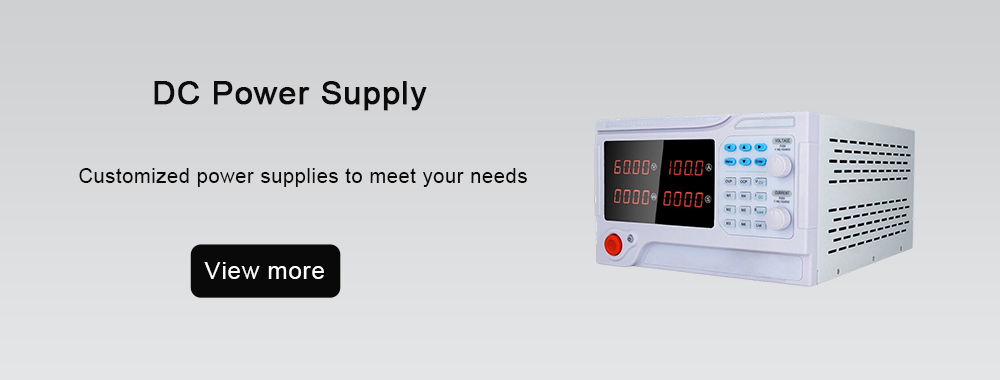
As a core device in scenarios such as industrial testing, electronic research and development, and precision instrument power supply, the accuracy of output voltage and current of the programmable DC power supply directly determines the accuracy of test results and the stability of equipment operation. After long-term use, the programmable DC power supply will have accuracy deviation due to component aging, environmental changes, mechanical vibration and other factors. If it is not calibrated in time, it will affect the subsequent experiment and production work. Calibrating the accuracy of the programmable DC power supply is not a simple parameter adjustment, but a systematic operation following standard procedures and relying on standard instruments. Combined with the application characteristics of the programmable DC power supply, the following disassembles the core steps and key points of calibration to make the calibration operation more professional and practical.
Pre-calibration Preparation: Lay a Solid Foundation for Calibration of Programmable DC Power Supply
Before formally calibrating the programmable DC power supply, it is necessary to complete the dual preparation of equipment and environment, which is the premise to ensure the accuracy of calibration results. First, place the programmable DC power supply in a normal temperature, dry environment without strong electromagnetic interference for preheating for more than 30 minutes, let the internal components of the equipment enter a stable working state, and avoid calibration errors caused by temperature fluctuations; second, prepare standard instruments that have passed metrological verification, including high-precision digital multimeter, precision standard resistance, load box, etc. The accuracy grade of various instruments must be at least one order of magnitude higher than that of the programmable DC power supply. At the same time, check the appearance and wiring ports of the programmable DC power supply to ensure no damage or oxidation, and the wiring lines are firmly connected, laying a hardware foundation for subsequent calibration.
Core Parameter Calibration: Grasp the Accuracy Key of Programmable DC Power Supply
The accuracy calibration of the programmable DC power supply mainly focuses on two core parameters of voltage and current, which are verified one by one in two working modes of constant voltage and constant current, covering the common output range of the equipment. In the constant voltage mode, adjust the programmable DC power supply to different rated voltage values, measure the actual output voltage with a high-precision digital multimeter, compare the deviation between the indicated value and the measured value, and adjust it through the internal calibration program of the equipment if it exceeds the allowable range; in the constant current mode, connect the precision standard resistance and load box in series, measure the voltage across the resistance with a digital multimeter and convert it into the actual current, and check the current indicated value accuracy of the programmable DC power supply. During calibration, multiple test points within the range should be selected instead of a single value to ensure that the output accuracy of the programmable DC power supply in the full range meets the requirements.
Post-calibration Verification: Ensure the Calibration Effect of Programmable DC Power Supply
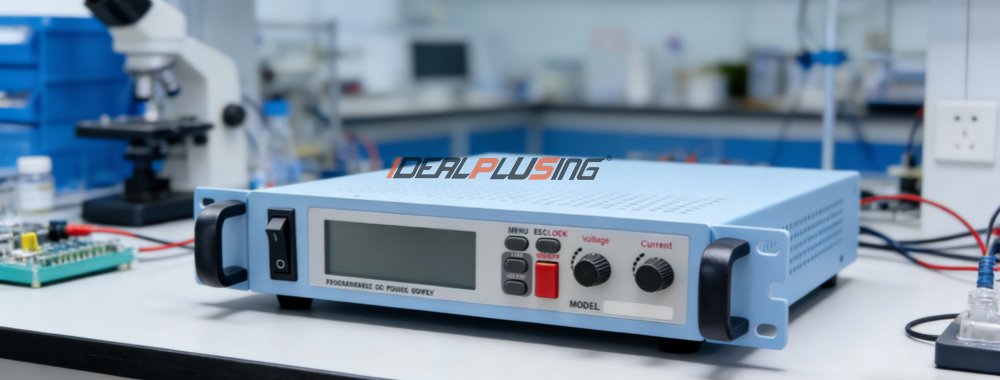
After completing the core parameter adjustment, it is necessary to conduct a comprehensive verification of the programmable DC power supply to avoid calibration deviation or inaccurate precision in the local range. First, retest the key range points in the calibration process to confirm that the deviation between the indicated value and the measured value of voltage and current is stably within the allowable error range; then detect the load effect and source effect of the programmable DC power supply, observe the fluctuation of output parameters by changing the load resistance and input voltage, and ensure the accuracy stability of the equipment under different working conditions. At the same time, check whether the calibration program of the programmable DC power supply is saved successfully. Some intelligent devices also need to verify the parameter transmission accuracy of the communication interface to ensure the accuracy consistency of the equipment when used online. In the design of programmable DC power supply, IDEALPLUSING has optimized the calibration interface and data storage function of the equipment, making the calibration operation more convenient and the results more stable.
Post-calibration Maintenance: Extend the Accuracy Retention Period of Programmable DC Power Supply
The completion of calibration is not the end of the work. Scientific post-maintenance can make the accuracy of the programmable DC power supply last longer. It is necessary to regularly clean the internal components and wiring ports of the programmable DC power supply to prevent dust and oxidation from affecting the circuit performance; place the equipment in a fixed working environment to reduce the drastic changes of environmental temperature, humidity and electromagnetic interference; establish a calibration file, record each calibration time, deviation data and adjustment parameters, and formulate a regular calibration plan according to the use frequency of the equipment. Generally, the industrial programmable DC power supply is recommended to be calibrated every 12 months, and the high-precision experimental equipment can be shortened to 6 months.
The accuracy calibration of the programmable DC power supply is a key operation to ensure its application value. From pre-preparation to core calibration, and then to post-verification and maintenance, each link directly affects the calibration effect. Following the standard calibration process can keep the programmable DC power supply with accurate output performance at all times, provide reliable power support for various industrial testing and research and development work, and also achieve a dual improvement in the service life and use efficiency of the equipment.
IDEALPLUISNG Power Expert:
We focus on the research and development, sales and services in the fields of DC-DC power modules, AC-DC rectifier modules, DC-AC inverters, AC power supplies, DC power supplies, LED power supplies, chargers, rectifier systems, etc., providing personalized, efficient, reliable and cost-effective power solutions for all walks of life.
Thank you for considering our services.