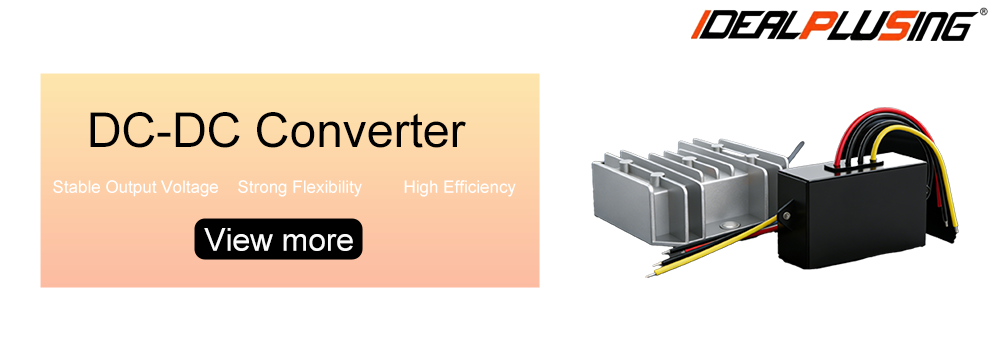
In industrial control, automotive electronics, communication equipment and portable intelligent devices, the DC-DC converter is a core component for stable power supply. Choosing the wrong DC-DC converter may lead to low efficiency, obvious heat generation, or even damage to the load and shorten the service life of the whole machine. This article shares selection ideas from a practical perspective to help you quickly match a suitable DC-DC converter for your scenario, balancing stability, efficiency and cost.
1. Clarify the Application Scenario and Basic Electrical Requirements
The first step in selection is to sort out the service environment and core parameters. First, determine the input voltage range. For automotive and battery-powered scenarios with large voltage fluctuations, a DC-DC converter with a wide input range must be selected; for fixed bus power supply, a model with a more compact input range can be chosen. Then determine the output voltage and output current, calculate according to the actual load rating, and reserve 1.2–1.5 times redundancy to cope with startup surges and short-term peaks. Meanwhile, judge whether electrical isolation is required. For medical, high-voltage industrial control and other scenarios, an isolated DC-DC converter is preferred to improve safety and anti-interference capability.
2. Focus on Efficiency and Temperature Rise Performance
Conversion efficiency is a key indicator of a DC-DC converter. High efficiency means lower loss and less heat generation, which is particularly important in environments with limited heat dissipation such as closed chassis and outdoor cabinets. When selecting a model, focus on the efficiency curve over the full load range rather than only the peak data. Some high-quality DC-DC converters adopt synchronous rectification and soft-switching technology, maintaining high efficiency at both light and heavy loads, which can significantly reduce energy consumption and heat dissipation costs in long-term use.
3. Electromagnetic Compatibility and Ripple Noise Cannot Be Ignored
Sensitive analog circuits, sensors, audio and high-precision acquisition modules have extremely high requirements for power supply noise. Excessive ripple will cause signal distortion and data drift. When selecting a model, pay attention to the output ripple index of the DC-DC converter, and match a reasonable filter structure to meet the system EMC requirements. Also pay attention to the switching frequency design; a reasonable frequency can reduce interference and facilitate certification testing.
4. Protection Function and Environmental Adaptability
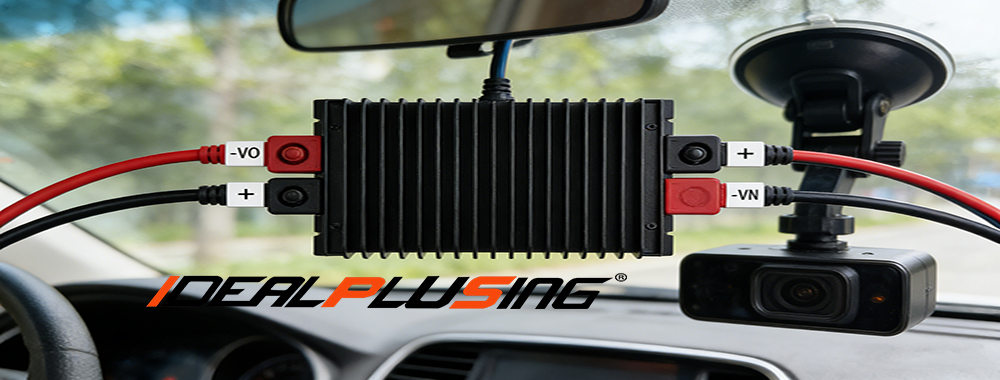
A reliable DC-DC converter should have a complete protection mechanism, including overvoltage, overcurrent, short circuit, overtemperature and undervoltage lockout, to quickly protect itself in abnormal conditions and avoid damaging the subsequent circuit. For industrial and automotive scenarios, the operating temperature range should also be considered. A wide-temperature DC-DC converter can adapt to extreme temperature differences and ensure long-term stability. In addition, the package size, installation method and heat dissipation design should also match the structural layout.
5. Brand and Solution: Balancing Quality and Cost Performance
There are many models of DC-DC converters on the market, ranging from patch modules to integrated converters, with obvious differences. When pursuing high stability and consistency, you can choose a professional power brand solution. IDEALPLUSING has mature product lines and reliable performance in the field of DC-DC converters, suitable for scenarios with high stability requirements. Prioritize sample testing during selection to verify efficiency, ripple, dynamic response and temperature rise before mass use.
Conclusion
There is no absolute optimum for choosing a DC-DC converter, only the most suitable one. First lock in the scenario and electrical parameters, then focus on evaluating efficiency, noise, protection and environmental adaptability, combined with brand and actual measurement performance, you can select a stable and reliable model. A properly selected DC-DC converter can make the whole machine power supply more stable, more energy-efficient, and have a longer service life.