
In AC-DC power supply design, switching frequency is one of the key parameters that significantly affects overall system performance. It influences the size of magnetic components inside the power supply, while also affecting power density, conversion efficiency, electromagnetic compatibility (EMC), and long-term reliability.
From an engineering perspective, raising switching frequency does not universally deliver improved performance. Higher operating frequencies enable structural miniaturization yet introduce fresh design obstacles. Striking a balanced trade-off between switching frequency, efficiency and reliability remains a core objective throughout the R&D cycle of AC-DC power supplies.
1. Why Switching Frequency Is Indispensable for AC-DC Converter Design
Working Principles of AC-DC Switching Power Supplies
Conventional linear power regulators adjust output voltage by continuously modulating semiconductor operating states. By contrast, contemporary AC-DC equipment predominantly adopts Switch-Mode Power Supply (SMPS) architectures. The core mechanism relies on power semiconductor switching between ON and OFF states at high speed to convert incoming alternating current into regulated direct-current output.
In a standard AC-DC signal chain, mains AC first undergoes rectification and filtering to generate high-voltage DC. Power switches then regulate energy transfer, followed by high-frequency transformers, inductors and output filtering networks to deliver targeted voltage and current levels. The switching approach enables efficient energy regulation, delivering superior conversion efficiency and compact power density compared with linear alternatives.
Switching frequency refers to the number of complete ON/OFF cycles executed by power switches per second, normally quantified in kHz or MHz. This parameter directly governs the rate of energy transmission inside the converter.
Functional Impacts of Switching Frequency
A higher switching frequency allows more energy transfer cycles within a given time window. This creates room for downsizing magnetic components and enhances the converter’s transient response capability.
In practical hardware development, switching frequency exerts tangible influence over:
· Physical footprint of transformers and inductors
· Output voltage ripple characteristics
· Dynamic load response speed
· Overall power density
· Switching losses and thermal management requirements
Therefore, switching frequency cannot be treated as an isolated variable; it interacts closely with every aspect of the complete converter system design.
2. Higher Frequencies Enable Miniaturized Magnetics and Elevated Power Density
Miniaturization of Magnetic Components under High-Frequency Operation
High-frequency transformers undertake electrical isolation and voltage scaling in AC-DC circuits. Their design is tightly linked to magnetic flux variation rates. According to Faraday’s Law of Electromagnetic Induction, induced winding voltage correlates with the rate of flux change. With an increased rate of flux change, magnetic components can achieve identical power transfer capacity with reduced physical size.
This fundamental principle explains why modern SMPS designs operate at tens of kHz or above, instead of relying on bulky 50/60Hz line-frequency transformers.
Key benefits brought by elevated switching frequency include:
· Reduced form factor for high-frequency transformers
· Lower size requirements for magnetic cores
· Decreased overall equipment weight
· Improved power output per unit volume
For industrial automation hardware and laboratory test instruments, greater power density allows designers to fit higher output capacity within constrained mechanical enclosures.
Power Density Improvements via High-Frequency Architectures
At fixed rated output power, increased switching frequency reduces the required energy storage capacity of passive components. Transformers, inductors and capacitors can be implemented with smaller specifications, supporting more compact AC-DC hardware layouts.
Table 1
Power Supply Type | Operating Frequency | Transformer Size | Power Density |
Linear Power Supply | 50/60 Hz | Large | Low |
Conventional SMPS | 50–100 kHz | Moderately Small | Medium |
High-Frequency SMPS | 200 kHz and above | Compact | High |
Classic power electronics literature such as Fundamentals of Power Electronics by Erickson systematically analyzes magnetic component sizing, energy transfer mechanisms and frequency selection principles for switching converters. The text confirms a direct correlation between switching frequency and converter dimensional specifications.
Nevertheless, performance gains do not scale infinitely with rising frequency. New engineering challenges emerge as operating frequencies climb.
3. Hidden Drawbacks: Elevated EMI and Increased Switching Losses
While higher switching frequencies support component downsizing, they raise technical barriers for circuit developers. Rapid voltage and current transitions during semiconductor switching generate broadband high-frequency noise, which may interfere with adjacent circuitry or external equipment. Electromagnetic interference (EMI) suppression thus becomes a critical consideration for high-frequency AC-DC designs.
Trade-Off Matrix for Elevated Switching Frequency
Table 2
Advantages | Challenges |
Smaller magnetic components | Increased electromagnetic interference |
Higher volumetric power density | Greater switching losses |
Faster transient load response | Stricter thermal design demands |
Increased Electromagnetic Interference

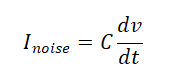
Higher switching frequency creates:
· Faster voltage transitions (higher dv/dt)
· Faster current transitions (higher di/dt)
· Extended range of harmonic frequencies
Raised operating frequency broadens the spectrum of internally generated switching harmonics. Insufficient filtering leads to intensified conducted and radiated interference.
Engineers commonly deploy these mitigation strategies:
· Optimized printed circuit board layout
· Enhanced input and output filter networks
· Refined grounding schemes
· Metallic shielding structures
· Controlled semiconductor transition speeds
Within industrial deployment scenarios, robust EMI design preserves stable operation for both the power unit and the broader system.
Increased Switching Losses
The switching loss formula for MOSFETs is defined as:
Psw=0.5×V×I×(tr+tf)×f
As frequency increases:
· Higher energy loss per switching event
· The number of switching cycles per unit time rises
· Cumulative power losses grow proportionally
Ideally, power semiconductors operate purely in fully ON or fully OFF states. In reality, transition intervals exist during switching. Voltage and current overlap within these intervals and produce power dissipation known as switching loss. Higher frequency multiplies switching cycles and accumulates greater total loss.
High-frequency operation further contributes to:
· Elevated junction temperatures on power semiconductors
· Higher thermal burden on cooling systems
· Accelerated ageing of electronic components
Any high-frequency design must incorporate thermal dissipation planning from the early development phase.
4. Balancing Frequency, Efficiency and Reliability in Engineering Practice
No universal optimal switching frequency suits all AC-DC converter products. Different application scenarios carry divergent performance priorities:
· Laboratory testing equipment typically prioritizes output precision and fast dynamic response
· Industrial control hardware emphasizes sustained long-run stability
· Telecommunication infrastructure focuses on power density and integration space
Designers need to comprehensively evaluate multiple dimensions:
1. Switching frequency: Higher values shrink component size and boost transient response, yet raise implementation complexity.
2. Energy efficiency: Frequency elevation requires careful selection of power devices, control schemes and topologies to offset incremental losses.
3. Electromagnetic compatibility: Adequate filtering and structural design are mandatory to satisfy official EMC standards.
4. Thermal performance: Temperature control during continuous operation directly determines service life and reliability.
Sophisticated AC-DC design avoids maximizing a single parameter in isolation. Instead, engineers pursue rational compromises across all performance indicators.
For industrial power supply development, practitioners select appropriate frequency bands based on output rating, available installation space, ambient temperature and load characteristics, rather than arbitrarily pushing frequency upward.
5. Conclusion: Optimized Designs Stem from Balanced Frequency-Performance Tradeoffs
Switching frequency constitutes a foundational variable shaping AC-DC converter behaviour. Boosting frequency enables compact transformer construction, higher power density and improved dynamic load response. On the downside, it brings elevated EMI emissions, amplified switching losses and more stringent thermal constraints.
Well-engineered AC-DC power supplies are not defined by the highest feasible switching frequency. Success hinges on finding the optimal equilibrium among power density, conversion efficiency and long-term reliability.
Within industrial power applications, consistent operational stability often outweighs marginal improvements in isolated performance metrics. Careful topology selection, component screening and system-level tuning are essential to achieve durable energy conversion.
IDEALPLUSING focuses on balancing high efficiency, compact design and reliability in the development of AC-DC power supplies and related power conversion products. Through optimized circuit design and system-level engineering, the company provides stable power solutions tailored to various industrial applications, including industrial testing and automated control systems.
As electronic equipment continuously demands tighter space utilization and superior energy efficiency, switching frequency will remain a core design variable for AC-DC converters. Still, premium power products are always built upon holistic system optimization rather than unilateral parameter tuning.