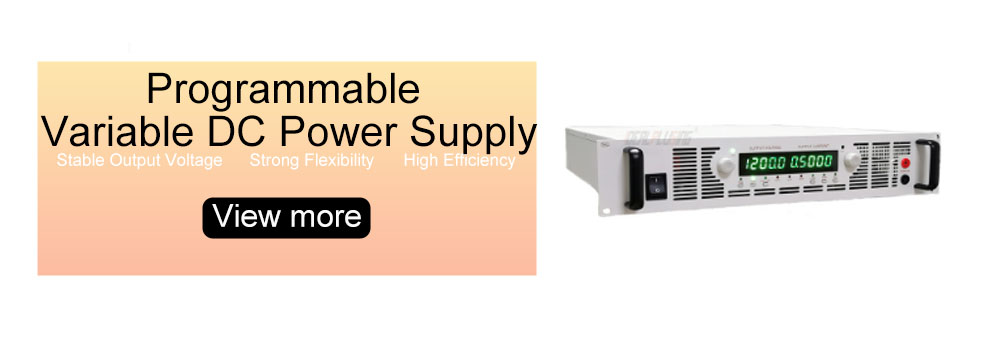
In the world of high-performance electronics, power delivery is the foundation of all performance. Whether driving massive server racks, powering industrial automation arms, or fueling high-end Class-D audio amplifiers, the heart of the system is often a robust Switching Mode Power Supply (SMPS).
Today, we are taking an exclusive look inside a formidable piece of engineering: a custom-built, high-wattage dual-channel switching power supply module. Based on the component density, layout symmetry, and heavy-duty cabling, this unit is clearly designed for demanding applications where reliability and raw power are paramount. Let’s break down the engineering behind this beast.
I. Architecture Overview: The Symmetrical Dual-Channel Design
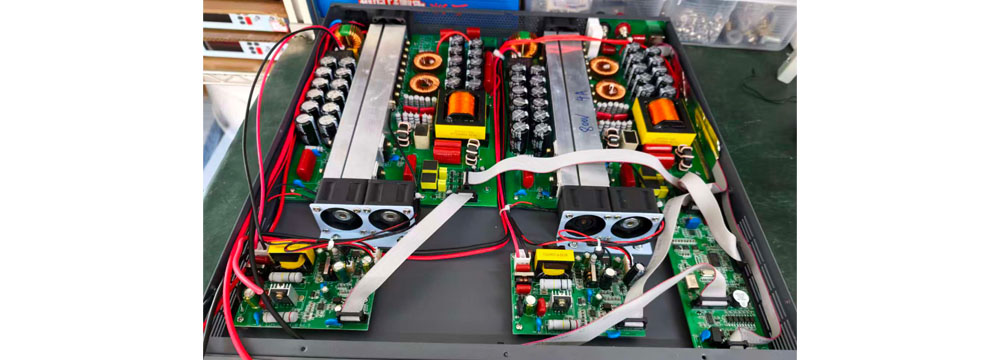
The most striking feature of this power supply is its distinct dual independent power channel design. Instead of a single massive board, the chassis houses two nearly identical, self-contained power conversion boards running in parallel.
1. Load Sharing & Redundancy: This architecture allows the system to split the total current load between two channels. This reduces thermal stress on individual components and increases overall efficiency.
2. Modular Maintenance: From a serviceability standpoint, this is brilliant. If one channel fails, it can potentially be isolated or replaced without discarding the entire unit.
3. Physical Layout: The boards are mounted vertically or at an angle within the chassis to maximize airflow, a critical consideration for high-density power electronics.
II. Component Analysis: The Heart of the Conversion
Looking closely at the green PCBs, we can identify the classic topology of a high-efficiency AC-DC converter, likely utilizing a PFC (Power Factor Correction) + LLC Resonant Converter stage.
· The PFC Stage (Input Side):On the outer edges, we see large toroidal inductors (copper coils). These are almost certainly boost inductors used for Active PFC. They ensure the power supply draws current smoothly from the mains, complying with harmonic distortion standards (like EN61000-3-2) and improving efficiency.
· High-Voltage Capacitor Bank:Next to the inductors are banks of high-voltage electrolytic capacitors (likely 450V rated). These form the bulk DC bus, smoothing out the rectified AC voltage before it hits the switching stage.
· The LLC Resonant Tank: Moving inward, we spot yellow transformers and smaller resonant inductors. This indicates an LLC topology, which is famous for achieving Zero Voltage Switching (ZVS), drastically reducing switching losses and allowing for higher frequencies and smaller magnetics.
· Secondary Side Rectification: On the opposite side of the transformers, we see arrays of capacitors and likely synchronous rectifier MOSFETs (though hidden under heatsinks) that convert the high-frequency AC back into stable low-voltage DC (e.g., 12V, 24V, or 48V).
III. Thermal Management and Safety Engineering
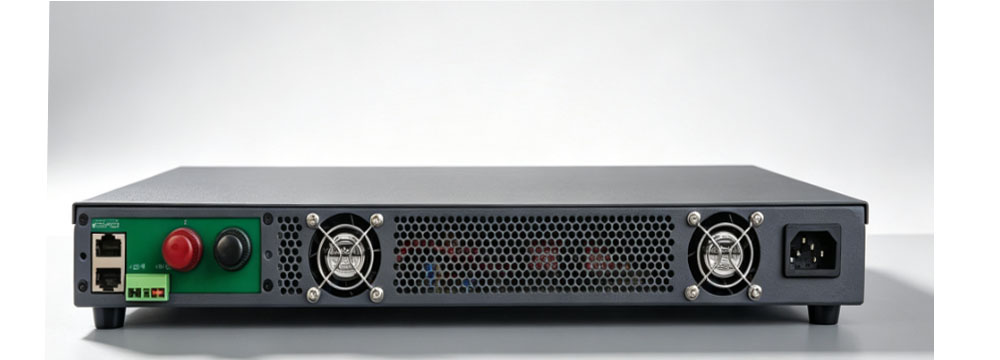
High power means high heat. This unit employs a multi-layered approach to thermal management and safety.
·Active Cooling:Each main power board features a dedicated dual-fan assembly mounted on a large aluminum extrusion heatsink. This active cooling is essential for dissipating heat from the primary switching MOSFETs and secondary rectifiers.
· Auxiliary Power Supplies:Interestingly, there are smaller, separate daughterboards (visible at the bottom left and right). These are likely "standby" or auxiliary power supplies (5V/12V) used to power the control logic, fans, and relay drivers before the main power rails ramp up.
· Heavy Gauge Wiring:The thick red and black silicone wires indicate high current capacity. Silicone insulation is chosen for its high-temperature resistance, preventing melting near hot components.
·Signal Isolation:The grey ribbon cables connecting the different stages suggest galvanic isolation between the high-voltage primary side and the low-voltage control side, ensuring safety and noise immunity.
IV. Conclusion
This power supply module is a textbook example of modern industrial power design. By combining a symmetrical dual-channel architecture with advanced LLC topology and robust thermal management, it achieves a balance of high power density and reliability. Whether it ends up powering a concert sound system or a factory robot, it is built to last.
Looking for a custom high-power switching power supply solution tailored to your specific voltage or current requirements?Contact our engineering teamtoday to discuss your project.