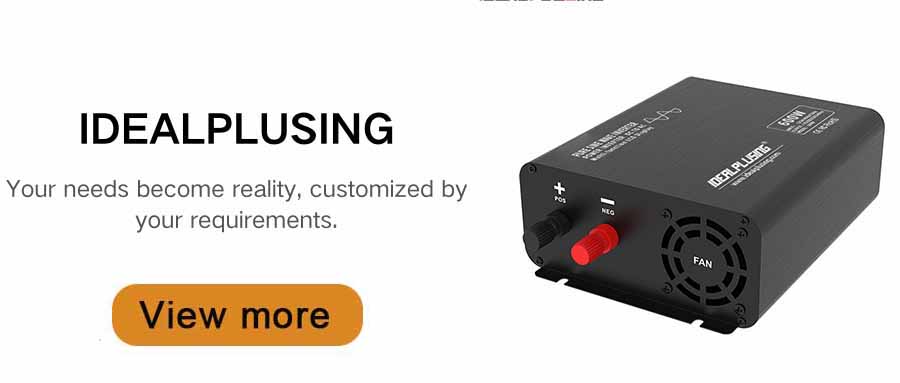
In the field of power conversion equipment, inverters, as core devices for converting direct current to alternating current, are widely used in many scenarios such as household backup power supply, outdoor operations, and industrial auxiliary power supply. Pure sine wave inverters, modified sine wave inverters and square wave inverters, as the three mainstream types of inverters, show vastly different performances in actual use due to different output waveforms and adaptability. Many people are easily confused by various parameters when purchasing. In fact, as long as we clarify the core differences between the three, we can make a suitable choice according to our own needs. Brands like IDEALPLUSING, which focus on the power equipment field, have their product layout developed around the application characteristics of different types of inverters.
1. Output Waveform: The Most Essential Difference Between the Three
The core performance difference of inverters lies in the different AC waveforms output, which is also the most fundamental difference between pure sine wave inverters, modified sine wave inverters and square wave inverters. A square wave inverter outputs a simple rectangular square wave with no transition and sharp edges and corners. It is the most basic power conversion waveform without any smoothing treatment. A modified sine wave inverter, also known as a quasi-sine wave inverter, is simply optimized on the basis of the square wave and outputs a stepped waveform. Although it moves closer to the sine wave, there are still obvious waveform faults and it is not a perfect smooth curve. A pure sine wave inverter can output a smooth sine wave exactly the same as the mains power, with a continuous and regular waveform, which can match the power demand of various electrical appliances to the greatest extent, and is also a technically superior type of inverter at present.
2. Adaptable Scenarios: From Single Load to Full-Scenario Compatibility
The difference in waveform directly determines the applicable electrical range of pure sine wave inverters, modified sine wave inverters and square wave inverters, and the adaptability of the three increases step by step. The square wave inverter has the singleest adaptability and can only drive pure resistive loads such as incandescent lamps, electric stoves and electric blankets. Such loads have no special requirements for power waveform. However, if a square wave inverter is used to drive electrical appliances with inductive loads such as motors and refrigerators, the equipment will heat up seriously, run with loud noise, and even damage the internal components of the electrical appliances.
The adaptability of the modified sine wave inverter has been improved, which can meet the use needs of most basic household appliances in daily life, such as ordinary fans, non-inverter TVs, small ordinary chargers, etc., and can play a role in household basic power supply and temporary outdoor power supply. However, in the face of equipment with high requirements for power stability such as refrigerators, air conditioners, frequency conversion appliances, as well as medical instruments, professional audio and precision testing equipment, the modified sine wave inverter will have unstable operation and abnormal start and stop of equipment, and it is not recommended to use it for a long time.
The pure sine wave inverter has realized full-scenario load compatibility. It can stably drive not only household high-power electrical appliances such as refrigerators, air conditioners and washing machines, but also industrial and office equipment such as computers, servers and water pumps, as well as high-precision load such as medical equipment and precision instruments. The power output by the pure sine wave inverter is the same as the mains power, which can effectively protect electrical appliances, and it is the first choice for household backup power supply, industrial precision operations and outdoor professional equipment power supply.
3. User Experience and Cost: The Balance Between Performance and Price
In terms of actual user experience, the gap between pure sine wave inverters, modified sine wave inverters and square wave inverters is also obvious. The square wave inverter runs with loud noise, the equipment loss is fast when driving non-resistive loads, and the overall efficiency is general. The modified sine wave inverter has reduced operating noise and relatively reduced equipment loss, with a medium efficiency, which can meet the experience needs of basic use. The pure sine wave inverter runs with almost no noise, no extra heating of electrical appliances during operation, high power conversion efficiency and minimal electromagnetic interference, and the user experience is basically the same as that of mains power supply.
In terms of cost, the prices of the three increase step by step with the improvement of performance. The square wave inverter has the lowest price due to simple technology and basic materials. The modified sine wave inverter has been optimized in technology and is at a medium price, which is a cost-effective choice. The pure sine wave inverter has a relatively higher price due to high core technical requirements and more sophisticated craftsmanship, but considering the comprehensive user experience and equipment protection effect, its cost performance will gradually emerge in long-term use.
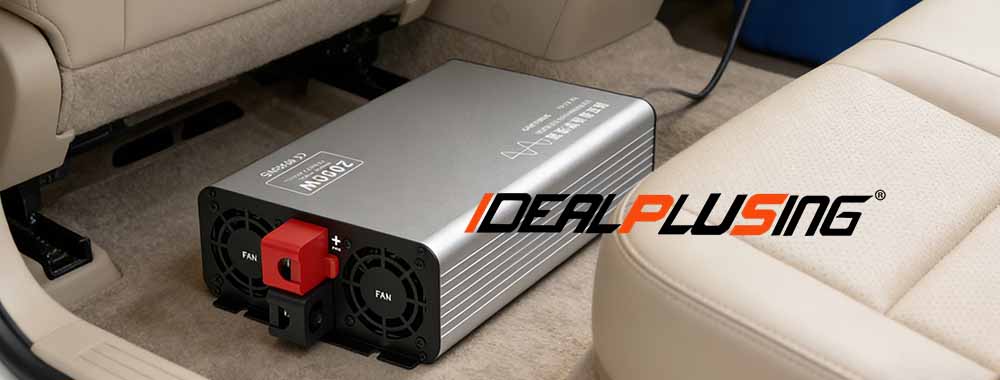
In summary, the choice of pure sine wave inverter, modified sine wave inverter and square wave inverter core lies in one's own usage needs. If it is only to drive simple resistive loads, the square wave inverter can meet the basic needs; if it is used for daily basic home appliance power supply, the modified sine wave inverter has a higher cost performance; if it is necessary to drive high-power and precision equipment and pursue a stable power supply experience, the pure sine wave inverter is the best choice. When choosing inverter products, professional brands like IDEALPLUSING, whose polishing of different types of inverter products in terms of craftsmanship and adaptability, can also provide more reliable choices for users with different needs.