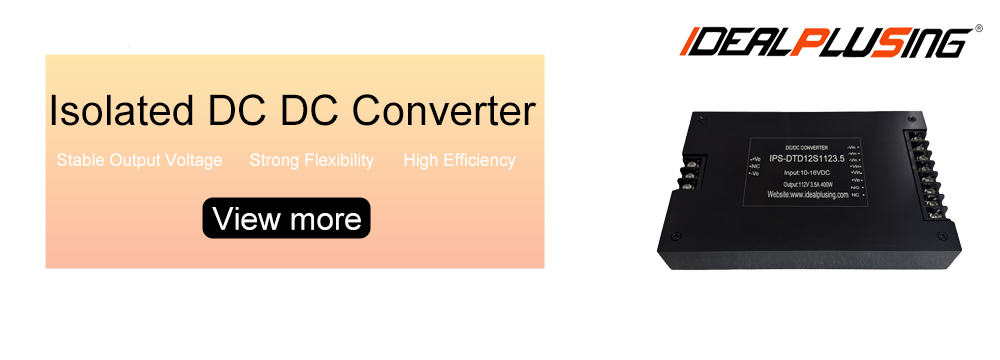
As a core device in the field of power electronics, the isolated DC converter undertakes the key functions of voltage conversion and electrical isolation in scenarios such as rail transit, new energy energy storage, and industrial automation. The heat generated during equipment operation directly affects the conversion efficiency, operational stability and service life of the isolated DC converter. Therefore, a suitable cooling method is an important link in the design and application of the isolated DC converter. Isolated DC converters with different powers and application environments have significant differences in heat dissipation requirements. Only by selecting a suitable cooling method can the isolated DC converter always be in the best working state. Next, we will analyze the common cooling methods and applicable scenarios of isolated DC converters.
Natural Cooling: The Basic Choice for Low-Power Isolated DC Converters
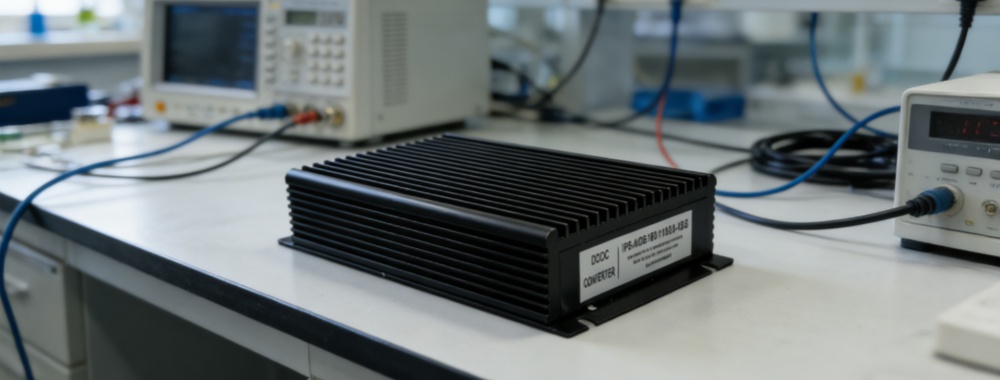
Natural cooling is a heat dissipation method that relies on natural air convection and thermal radiation of the equipment shell, without additional heat dissipation accessories, and is the most commonly used cooling form for low-power isolated DC converters. Such isolated DC converters are mostly used in small industrial control, low-power instrument power supply and other scenarios, with power generally ranging from several watts to tens of watts, and low heat generation during operation. By optimizing the shell structure and adopting heat sinks made of high thermal conductivity materials, the equipment temperature can be controlled within a safe range. Isolated DC converters with natural cooling have the characteristics of simple structure, low failure rate, no noise and low maintenance cost, and are suitable for scenarios with requirements for installation space and operating noise, making them a cost-effective choice for miniaturized isolated DC converters.
Forced Air Cooling: The Mainstream Solution for Medium-Power Isolated DC Converters
When the power of the isolated DC converter is increased to the watt-level to tens of kilowatt-level, natural cooling can no longer meet the heat dissipation requirements, and forced air cooling has become the mainstream choice. Forced air cooling drives the rapid flow of air by installing a cooling fan inside the isolated DC converter to take away the heat generated by the power devices. Some high-end products are also equipped with intelligent temperature-controlled fans that adjust the speed according to the equipment temperature, taking into account both heat dissipation effect and energy consumption. Isolated DC converters with this cooling method are widely used in industrial automation equipment, small and medium-sized energy storage systems and other scenarios. During installation, efficient heat dissipation can be achieved only by ensuring good ventilation around the equipment. It is a heat dissipation solution that balances practicality and economy. A variety of medium-power isolated DC converters of IDEALPLUSING adopt this highly adaptable cooling design.
Liquid Cooling: A Professional Configuration for High-Power Isolated DC Converters
For megawatt-level, high-power isolated DC converters, such as rail transit traction systems and DC power distribution equipment in large photovoltaic power stations, the heat flux density is extremely high during equipment operation, and liquid cooling has become a necessary cooling method. Liquid cooling uses special cooling media such as deionized water as the carrier, and directly contacts the power module of the isolated DC converter through a closed flow channel to quickly export heat. Some products also combine heat pipe technology to further improve heat dissipation efficiency. Isolated DC converters with liquid cooling have far better heat dissipation effects than air cooling, can effectively control the junction temperature of devices, and adapt to the operation requirements of high load and long time. The disadvantage is that the structure is relatively complex, and there are high requirements for cooling media and sealing technology, which are mostly used in industrial scenarios with strict requirements for equipment stability.
The selection of the cooling method for the isolated DC converter is core to matching the equipment power and application environment. From basic natural cooling to professional liquid cooling, each method is designed around the operating requirements of the isolated DC converter. A reasonable heat dissipation solution can not only guarantee the conversion efficiency of the isolated DC converter, but also extend its service life, making the isolated DC converter more stable and efficient in applications in various fields.
IDEALPLUISNG Power Expert:
We focus on the research and development, sales and services in the fields of DC-DC power modules, AC-DC rectifier modules, DC-AC inverters, AC power supplies, DC power supplies, LED power supplies, chargers, rectifier systems, etc., providing personalized, efficient, reliable and cost-effective power solutions for all walks of life.
Thank you for considering our services.