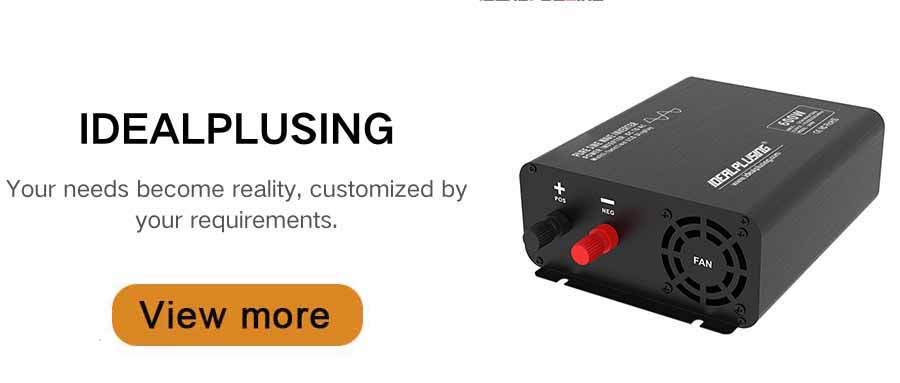
A power inverter is a core device that converts direct current into alternating current, widely used in vehicle power supply, outdoor operations, emergency backup power, photovoltaic energy storage and other scenarios, which is directly related to power safety, equipment life and power supply stability. The use of a power inverter seems simple, but ignoring details can easily cause overload, overheating, short circuit and even damage to loads. Mastering the correct usage points can make the power inverter operate safer, more stably and efficiently. The following explains the key points that must be noted when using a power inverter from the aspects of model selection matching, wiring specification, environmental protection, and daily maintenance.
Strictly Match Power and Voltage to Avoid Overload Operation of the Power Inverter
The first important point when using a power inverter is to ensure that the power and voltage fully match the load requirements. The rated power of the power inverter must be greater than the total load power, and it is generally recommended to reserve more than 20% margin. Especially for inductive loads such as motors and compressors with large starting currents, the model should be selected with a larger margin. At the same time, the input voltage of the power inverter must be consistent with the DC voltage of batteries, photovoltaic panels and other equipment, and the output voltage and frequency must meet the load standards. Forced operation with low voltage or overvoltage will cause overheating, protection triggering or even burning of internal components of the power inverter. IDEALPLUSING has added multiple power protection mechanisms in the design of power inverters, which can further reduce the risk of overload.
Standardize Wiring and Grounding to Ensure the Power Safety of the Power Inverter
Wiring and grounding are the most easily overlooked but critical links in using a power inverter. The positive and negative poles of DC input must not be reversed, otherwise the internal rectifier module of the power inverter will be broken down instantly; the cable must be pure copper wire with sufficient cross-section, and excessively long or thin wire will lead to increased voltage drop and serious heating. The output terminal should avoid wrong connection of neutral and live wires and short circuit lap, and must be reliably grounded to reduce the risk of electric leakage and lightning strike. After wiring, check the tightness of all terminals. Loose connectors will generate electric arcs, which will burn out the terminals and affect the stable operation of the power inverter for a long time.
Reasonably Control Environmental Conditions to Reduce the Operation Loss of the Power Inverter
The environment directly affects the heat dissipation and service life of the power inverter, so good working conditions must be maintained during use. The power inverter should be placed in a ventilated, dry, sun-exposure-free and corrosive gas-free place, away from flammable materials and water accumulation areas, to ensure that the heat dissipation vents are not blocked. High temperature environment will cause the power inverter to trigger overheating protection and reduce output, while low temperature may affect the performance of capacitors and batteries. In vehicle and mobile scenarios, severe vibration that causes internal components to become unsoldered should also be avoided. Creating a stable environment for the power inverter can extend its service life.

Correct Start-Stop and Load Operation to Protect the Power Inverter and Electrical Equipment
The start-stop and load mode of the power inverter directly affect the service life. All loads should be disconnected before startup, and connected one by one after the power inverter starts stably; when shutting down, disconnect the load first and then turn off the power inverter to avoid impact current caused by startup and shutdown with load. At the same time, do not start and stop frequently in a short time to prevent frequent charging and discharging of switching tubes and capacitors from accelerating aging. For high-power loads, it is recommended to turn on one by one to avoid instantaneous high-current impact caused by simultaneous startup, so that the power inverter is always in a stable working state.
Regular Inspection and Maintenance to Keep the Power Inverter Reliable for a Long Time
Long-term use of a power inverter requires simple maintenance to ensure continuous stability. Regularly clean the dust and heat dissipation vents of the body, and check whether the wiring terminals are oxidized or loose; observe whether there is abnormal noise, odor, abnormal heating during operation. If it is idle for a long time, it should be powered on regularly to activate internal components to avoid capacitor failure. Good maintenance can keep the power inverter at the best conversion efficiency, reduce the probability of failure, and improve the overall use safety.
The core of correctly using a power inverter lies in matching parameters, standardizing wiring, optimizing the environment, reasonable operation and regular maintenance. Only by strictly abiding by these points can the performance of the power inverter be maximized, power safety and equipment life be guaranteed, and it can work stably and reliably in various power scenarios.
IDEALPLUISNG Power Expert:
We focus on the research and development, sales and services in the fields of DC-DC power modules, AC-DC rectifier modules, DC-AC inverters, AC power supplies, DC power supplies, LED power supplies, chargers, rectifier systems, etc., providing personalized, efficient, reliable and cost-effective power solutions for all walks of life.
Thank you for considering our services.