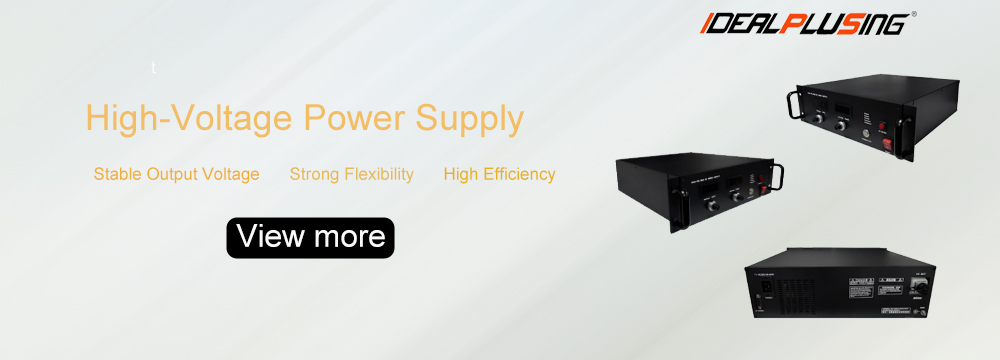
In industrial testing, material processing, scientific research and other scenarios, high voltage power supply is the core component to ensure stable operation of equipment. Many users are easy to confuse DC, AC and pulsed high voltage power supplies during selection. A wrong choice will not only affect process effects, but also increase the risk of equipment failure. This paper sorts out the core differences of the three types from characteristics, applicable scenarios and selection points, helping you accurately match the high voltage power supply scheme.
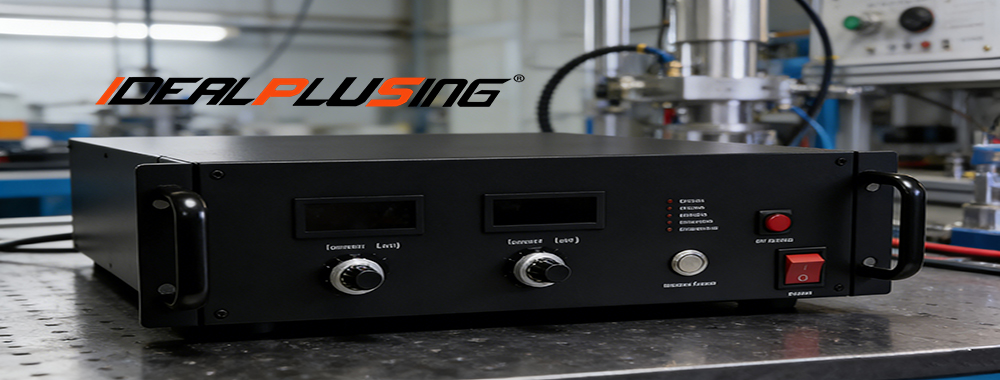
1. DC High Voltage Power Supply: Stable and Continuous High Voltage Output
DC high voltage power supply outputs unidirectional constant high voltage with fixed direction and smooth output, focusing on long-term stable power supply and low ripple control. This type of high voltage power supply realizes high voltage output through high-frequency inversion, multi-stage boosting and precision rectification. The closed-loop feedback system can quickly offset voltage fluctuations, making it suitable for scenarios with high requirements for output stability.
Its advantages include pure output, low interference and support for long-term continuous operation. Multiple protection mechanisms can deal with short circuits, arc drawing and other abnormal conditions. It is commonly used in electrostatic precipitation, X-ray imaging, insulation withstand voltage testing, electron acceleration and other fields. These scenarios require a continuous and stable high-voltage electric field, and waveform mutation is not allowed to interfere with process accuracy. When selecting, focus on voltage stability, ripple coefficient and insulation protection level to ensure the safe and reliable long-term operation of the high voltage power supply.
2. AC High Voltage Power Supply: Alternating Polarity High Voltage Supply
AC high voltage power supply outputs high voltage with periodic alternating polarity, and the waveform commutates regularly over time, suitable for applications requiring bidirectional electric fields. This type of high voltage power supply mostly adopts power-frequency or high-frequency inversion schemes, and can adjust the output frequency and amplitude to meet the commutation needs of different loads. Its core value is to achieve special process effects through polarity switching.
AC high voltage power supply is often used in electrical equipment withstand voltage tests, dielectric aging detection, bidirectional electrolytic treatment and other scenarios. Polarity switching can avoid load polarization caused by unidirectional electric fields and improve processing uniformity. Compared with DC high voltage power supply, it does not require continuous unidirectional voltage stabilization, and focuses more on waveform commutation accuracy and insulation tolerance. When selecting, match the load frequency requirements and pay attention to the overload protection and heat dissipation design of the high voltage power supply to cope with load fluctuations caused by polarity switching.
3. Pulsed High Voltage Power Supply: Instant High-Energy High Voltage Pulses
Pulsed high voltage power supply outputs intermittent, high-peak high voltage pulses, which can accurately adjust pulse width, frequency and duty cycle. It releases high energy instantaneously and is suitable for short-time strong electric field scenarios. This type of high voltage power supply realizes pulse output through switching modulation or Marx circuit, with fast response speed and controllable pulse waveform to meet the instantaneous high voltage requirements of special processes.
Pulsed high voltage power supplies are widely used in laser driving, plasma treatment, electroporation therapy, material surface modification and other fields. Instant high energy can improve processing efficiency and reduce thermal damage. Its core advantage is strong controllability, which can adapt to complex load characteristics. Some models support multi-stage pulse programming. When selecting, focus on verifying the pulse parameter adjustment range, rising edge speed and protection response time to ensure that the high voltage power supply matches the instantaneous high-power output requirements.
4. Core Selection Points of Three Types of High Voltage Power Supplies
To select a high voltage power supply, first clarify the load power supply type: choose DC high voltage power supply for continuous stable electric field, AC high voltage power supply for alternating polarity electric field, and pulsed high voltage power supply for instantaneous high-energy pulse. At the same time, make a comprehensive judgment based on power level, installation space, protection level and control mode, giving priority to products with process adaptability and high reliability.
In the selection of customized and standardized high voltage power supplies, you can refer to the product concept of IDEALPLUSING, which balances stability and adaptability to meet high voltage power supply needs in multiple scenarios. There is no absolute advantage or disadvantage in the selection of high voltage power supplies. Only by fitting process requirements can we ensure efficient and stable operation of equipment and reduce long-term operation and maintenance costs.