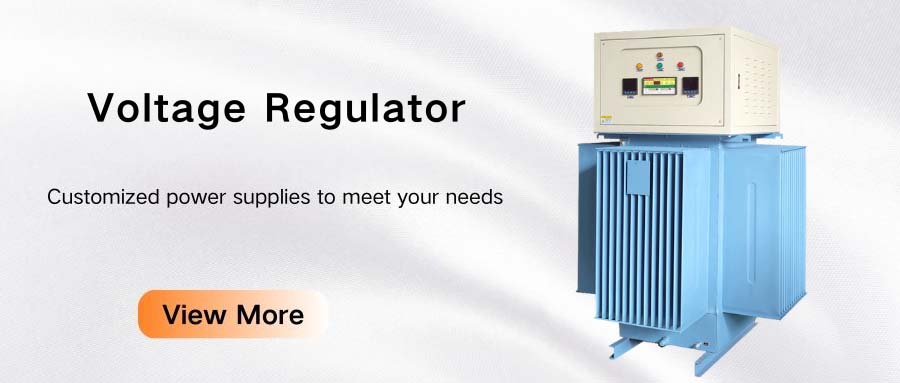
Voltage stabilizers are core equipment for ensuring stable voltage and protecting electrical appliances from damage caused by fluctuations in industrial production, commercial power consumption, and household precision equipment operation. Once a voltage stabilizer malfunctions, it may lead to unstable equipment operation at best, and downtime, component burnout and other problems at worst. Mastering basic troubleshooting skills for voltage stabilizers can quickly restore stable power supply, reducing downtime losses and maintenance costs. In daily use, IDEALPLUSING voltage stabilizers are suitable for multiple scenarios with stable performance, and reasonable maintenance can further improve durability.
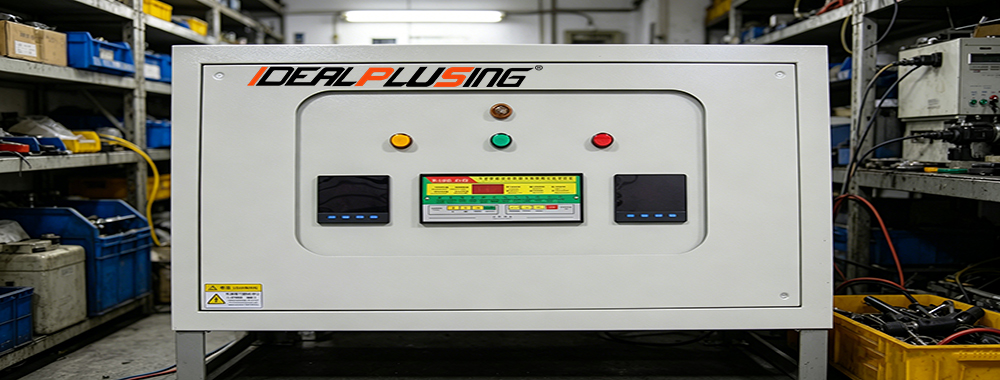
Ⅰ. Troubleshooting Steps for Voltage Stabilizers with No Output Voltage
It is a common initial fault that the voltage stabilizer has no output and no display on the panel after being powered on. You can troubleshoot in the following order:
Check the external power supply: Confirm that the socket has power, the power cord is not damaged, and the plug is firmly connected to the socket to avoid the voltage stabilizer not being powered on due to poor contact.
Check the protection components: Open the shell of the voltage stabilizer and check whether the fuse or fuse is blown. If it is blown, check for internal short circuit and overload problems first, and then replace the fuse with the same specification without arbitrarily increasing the specification.
Check the input wiring: Confirm that the input phase line and neutral line of the voltage stabilizer are correctly connected without looseness or wrong connection. For three-phase voltage stabilizers, focus on checking whether there is a phase loss.
Detect the starting circuit: If the above are normal, there may be a fault in the control circuit board. It is recommended to contact professional personnel for testing to avoid expanding the fault by self-disassembly.
Ⅱ. Solutions to Unstable Output Voltage of Voltage Stabilizers
Unstable output voltage of the voltage stabilizer and abnormal equipment operation are mostly related to the regulating mechanism or external conditions:
Check the input voltage: Confirm that the grid voltage is within the voltage stabilization range of the voltage stabilizer. Exceeding the range will lead to lagging regulation, and auxiliary equipment may be installed at the front end if necessary.
Check the load status: Calculate the total power of connected equipment to avoid exceeding the rated capacity of the voltage stabilizer. It is recommended to reserve a margin of 10%-20% to prevent overload from causing regulation failure.
Check the regulating parts: For servo-type voltage stabilizers, check whether the carbon brush is in good contact with the coil. Abraded carbon brush or insufficient pressure will cause voltage fluctuation, and the contact surface can be cleaned or the carbon brush can be replaced.
Troubleshoot internal components: Aging capacitors and cold solder joints on the circuit board will also cause abnormal voltage stabilization. Non-professionals should not adjust at will to avoid damaging the core components of the voltage stabilizer.
Ⅲ. Solutions to Abnormal Heating and Abnormal Noise Faults of Voltage Stabilizers
Slight heating during the operation of the voltage stabilizer is normal. If it is hot, accompanied by burnt smell or abnormal noise, shut down immediately for handling:
Improve heat dissipation conditions: Clean the dust in the heat dissipation holes of the voltage stabilizer, ensure no obstruction around and good ventilation to avoid aggravated heating in high-temperature environments.
Reduce load pressure: Disconnect unnecessary equipment and confirm no overload operation. Long-term full load is easy to cause overheating damage to coils and transformers.
Troubleshoot the source of abnormal noise: Abnormal noise is mostly caused by loose internal components, uneven friction of carbon brushes or motor faults. Check the fixing screws after power off, and stop using if abnormal.
Detect insulation and circuits: Humid and dusty environments are easy to cause insulation degradation. Regular cleaning can reduce the risk of short circuit and ensure the safe operation of the voltage stabilizer.
Ⅳ. Daily Maintenance and Fault Prevention of Voltage Stabilizers
Good daily maintenance can greatly reduce the faults of voltage stabilizers and extend their service life:
Regular cleaning: Clean the dust on the shell and inside of the voltage stabilizer every month to keep the components dry and clean.
Fasten wiring: Regularly check the wiring terminals to prevent looseness from causing poor contact, heating and ignition.
Reasonable use: Avoid frequent starting and stopping of the voltage stabilizer, do not operate overloaded, and extend the service life of core components.
Timely maintenance: Do not use forcibly in case of abnormality. Handle simple faults by yourself, and find professional personnel for complex problems to ensure the stable operation of the voltage stabilizer.
As voltage guarantee equipment, voltage stabilizers are crucial for correct troubleshooting and maintenance. Most faults can be quickly solved through basic inspection, and complex problems need professional maintenance. Attaching importance to the daily maintenance of voltage stabilizers, combined with reliable brand products, can provide continuous and stable voltage support for electrical equipment and reduce fault troubles.