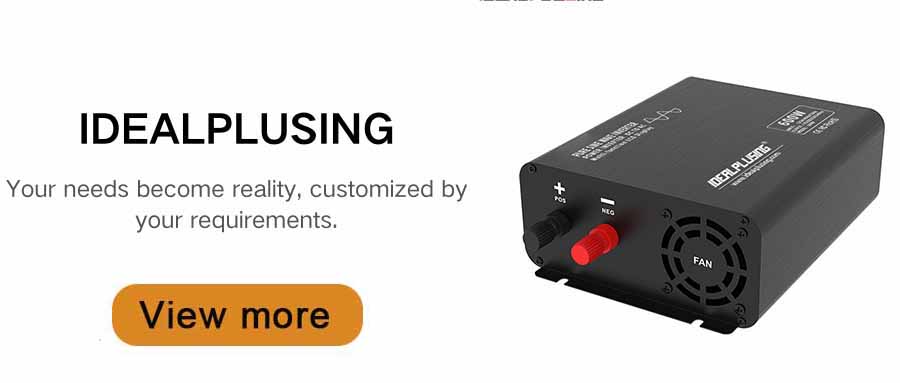
In industrial power supply, emergency backup, new energy storage, and precision instrument power supply, pure sine wave power supplies have become core components to ensure stable equipment operation. Many users struggle to choose between low-frequency and high-frequency pure sine wave solutions. Both output standard pure sine waves, but differ significantly in structure, characteristics, and application scenarios. Combining practical needs, this article helps you clarify the selection logic and avoid common mistakes.
1. Low-Frequency Pure Sine Wave Power Supply: Stable and Reliable for Heavy Loads and Harsh Environments
The low-frequency pure sine wave power supply uses a power-frequency transformer as the core component, with an operating frequency synchronized with the mains. It delivers a pure output waveform and strong anti-interference capability. Its advantages include excellent overload and short-circuit tolerance, enabling stable driving of inductive heavy loads such as motors, compressors, and water pumps. It is ideal for industrial sites, outdoor operations, and emergency power supply with large grid fluctuations, high temperatures, and dust.
This type of pure sine wave power supply features stable operation, long service life, and easy maintenance, capable of withstanding impact loads for a long time to ensure non-stop operation of critical equipment. The disadvantages are large size and weight, relatively low light-load efficiency, and relatively high no-load loss. It is more suitable for high-power applications with fixed installation and insensitive space requirements.
2. High-Frequency Pure Sine Wave Power Supply: Efficient and Lightweight for Precision and Space-Limited Scenarios
The high-frequency pure sine wave power supply adopts a high-frequency conversion architecture, eliminating the bulky power-frequency transformer. It features small size, light weight, high conversion efficiency, and low no-load loss. With fast response and lower output harmonics, it provides clean power for precision instruments, medical equipment, servers, communication modules, and other loads sensitive to power quality.
This pure sine wave power supply is suitable for computer rooms, laboratories, offices, vehicle-mounted mobile power supply, and other scenarios requiring space and energy efficiency. Its shortcomings are weak impact load resistance, not suitable for long-term operation with high-power inductive equipment, and slightly lower stability in extremely harsh environments than low-frequency solutions.
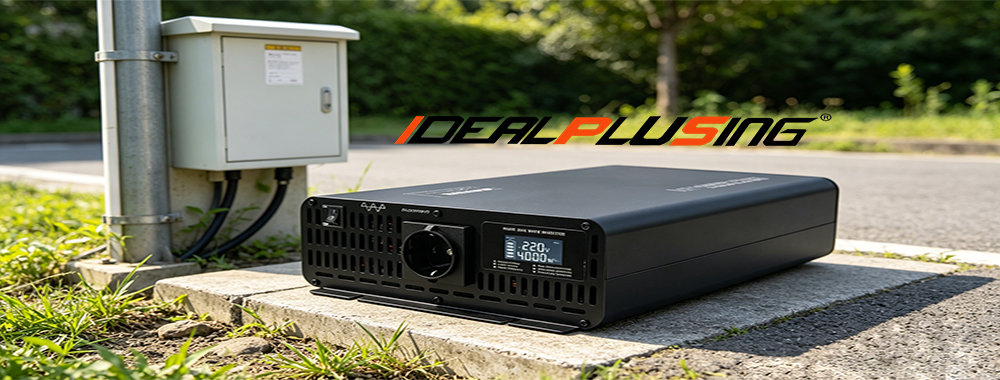
3. Selection Core: Precise Matching According to Load, Environment and Demand
When choosing a pure sine wave power supply, prioritize load type, installation conditions, and operating environment.If the load is mainly inductive heavy loads such as motors, compressors, water pumps, or used in harsh environments such as mines, factories, and fields, give priority to low-frequency pure sine wave power supplies. Their strong impact resistance and high isolation characteristics can reduce failure risks.If it is for precision electronics, medical instruments, small computer rooms, vehicle-mounted/portable systems, pursuing high efficiency, low noise, and lightweight, high-frequency pure sine wave power supplies are more suitable, which can reduce energy consumption and operation and maintenance costs in long-term use.Power matching is also critical: the rated power of the pure sine wave power supply should be greater than the total load power, with reasonable redundancy reserved. For inductive loads, additional consideration should be given to starting impact power to avoid long-term overload affecting service life.
4. Summary and Brand Reference
There is no absolute superiority or inferiority between low-frequency and high-frequency pure sine wave power supplies, only scenario adaptation differences. The low-frequency model focuses on stability and durability, while the high-frequency model focuses on high efficiency and lightweight. Combining load characteristics, installation space, environmental conditions, and energy efficiency requirements, you can select the right solution. Among professional pure sine wave power supply products, IDEALPLUSING's series models balance stability and adaptability, providing reliable choices for multi-scenario power supply.
Rational selection of pure sine wave power supplies can not only protect equipment safety but also improve system efficiency and reduce long-term costs. Hope this article helps you quickly locate the suitable solution and make power supply more stable and secure.