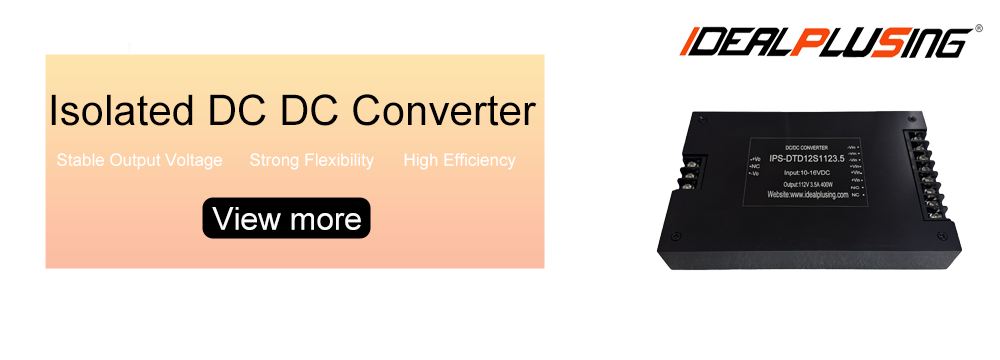
In industrial control, power monitoring, medical electronics, rail transit and other fields, isolated DC-DC converters are core components to ensure system safety and stable operation. Many engineers are confused about the differences between 2kV, 3kV and 5kV isolation voltages during selection, unclear about the practical significance of different ratings, and unsure how to make reasonable choices based on application scenarios. Starting from the essence of isolation voltage and combined with the actual application requirements of isolated DC-DC converters, this article explains the applicable scenarios and selection logic of the three voltage levels in detail, helping readers avoid misunderstandings and match solutions accurately.
Core Role of Isolation Voltage in Isolated DC-DC Converters
Isolation voltage represents the continuous power-frequency or DC withstand capability between the input and output of an isolated DC-DC converter, which determines the safety boundary of equipment under abnormal voltage, surge impact and ground potential difference. Isolated DC-DC converters achieve electrical isolation through internal insulation structures and high-frequency transformers, preventing high voltage from intruding into low-voltage loops, suppressing common-mode interference, and eliminating signal distortion and device damage caused by ground loops.
In short, isolation voltage is not an operating voltage, but a direct reflection of safety redundancy and anti-interference capability. The higher the value, the better the insulation strength, the stronger the transient overstress resistance, and the higher the reliability in complex electromagnetic environments and high potential difference scenarios.
2kV Isolated DC-DC Converters: Preferred for Conventional Industrial and Low-Voltage Scenarios
The 2kV isolation level is the most widely used basic configuration in isolated DC-DC converters, suitable for most low-voltage control and general industrial environments. Such products meet basic safety insulation requirements, can cope with general static electricity, electrical fast transients and small-amplitude ground potential fluctuations, with moderate cost and compact size, adapting to mass deployment scenarios.
Typical applications include ordinary PLC control systems, building automation, sensor power supply, low-end instruments and communication interface isolated power supply. In these scenarios, the system operating voltage is low and the electromagnetic environment is relatively mild. The 2kV withstand voltage is sufficient to meet safety and anti-interference requirements without insulation failure or interference breakdown. Choosing the 2kV solution can control the overall cost and PCB space while meeting functions, improving project cost performance.
3kV Isolated DC-DC Converters: Balanced Choice for Complex Industrial and High-Interference Environments
The 3kV isolation level is an enhanced insulation configuration, positioned as a mid-to-high-end universal solution in isolated DC-DC converters, suitable for scenarios with complex electromagnetic environments, obvious ground potential differences or high safety requirements. Compared with 2kV, 3kV withstand voltage provides stronger surge suppression capability and longer-term insulation reliability, effectively coping with strong interference caused by inverters and servo drivers in industrial sites, as well as common-mode voltage rise caused by long-distance wiring.
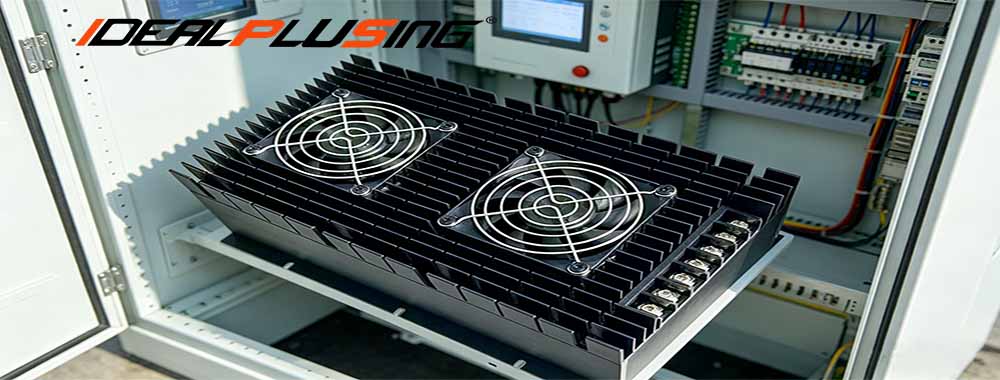
3kV isolated DC-DC converters are widely used in power acquisition modules, industrial field instruments, rail transit auxiliary power supplies, photovoltaic combiner box monitoring and other scenarios. These scenarios often have hundreds of volts of ground potential difference, and transient interference caused by lightning strikes and switching operations is frequent. The 3kV level can significantly reduce the failure probability and extend equipment service life. It achieves a good balance among safety margin, cost and volume, and is a priority choice for most industrial upgrading projects.
5kV Isolated DC-DC Converters: Essential for High-Risk High-Voltage and Medical Safety Scenarios
5kV is a high-level reinforced insulation, one of the highest safety configurations in isolated DC-DC converters, mainly for high-voltage access, personal safety-related or extreme electromagnetic environments. This level meets mandatory safety requirements in medical, high-voltage power, special equipment and other fields, can withstand higher test voltages and continuous overvoltage shocks, with extremely low risk of insulation failure.
5kV isolated DC-DC converters are mostly used in medical monitoring equipment, high-voltage inverter drive power supplies, power grid relay protection devices, energy storage system high-voltage side sampling power supplies, etc. Medical scenarios need to strictly protect the safety of patients and operators, while high-voltage power scenarios directly face kilovolt-level bus voltage. 5kV withstand voltage is the basic condition to meet double insulation and reinforced insulation standards, which can completely block dangerous voltage transmission and achieve reliable isolation between people and equipment, high voltage and low voltage.
Practical Suggestions for Withstand Voltage Selection of Isolated DC-DC Converters
Do not blindly pursue high withstand voltage during selection. It should be comprehensively judged based on system operating voltage, electromagnetic environment, safety standards and cost: prioritize 2kV for low-voltage conventional scenarios; choose 3kV for complex industrial and medium interference scenarios; 5kV is essential for medical, high-voltage power and high-surge scenarios. At the same time, pay attention to the impact of long-term aging, temperature, humidity and creepage distance on actual isolation capability to ensure stability throughout the life cycle.
In scenarios with high reliability requirements, priority can be given to brand solutions with complete insulation design and strict testing procedures. IDEALPLUSING has a mature product layout of high withstand voltage in the field of isolated DC-DC converters, which can provide matching safe power supply solutions for different industries.
Reasonable selection of isolation voltage is not only to meet safety regulations, but also to build a solid safety barrier for the system. Understanding the real differences between 2kV, 3kV and 5kV can make isolated DC-DC converters perform optimally in various scenarios, achieving the best balance of safety, stability and cost.