
1. The Adjustable Power Supply: Core Power for Electronics Labs
In the electronics laboratory, the adjustable power supply is one of the most fundamental instruments. Whether for prototyping circuits, testing electronic components, collecting precision data, or calibrating sensors, a stable and flexible adjustable power supply is essential. Many beginners mix up an adjustable power supply with a fixed power supply; the key difference is that an adjustable power supply supports continuous variation of voltage and current to match diverse loads and test conditions.
2. Key Differences Between Adjustable and Fixed Power Supplies
For beginners, it is easy to confuse adjustable power supplies with fixed power supplies, and even think they are interchangeable, which often leads to experimental errors or device damage. A fixed power supply has preset fixed output voltage and current, which can only supply power to a single specification of load, with extremely poor adaptability. The core advantage of an adjustable power supply is its "adjustability". Through knobs or digital buttons, it can realize continuous adjustment of voltage and current, from a few volts to dozens of volts, and a few milliamps to a few amps. It can accurately match the power supply needs of different electronic components and circuit modules. Whether it is basic resistance and capacitance testing or complex single-chip microcomputer system debugging, it can be easily adapted, which is also the key reason why it becomes the core equipment of the laboratory.
3. Working Principle and Equipment Selection
The adjustable power supply relies on closed-loop feedback control: it samples output voltage and current in real time, compares them with reference values, and adjusts power switching components to maintain stable output. There are analog knob-controlled and digital programmable types. Analog models are intuitive and easy to use, suitable for basic teaching experiments; digital models offer higher accuracy and easier presetting, and can also achieve precise control through upper computers, making them more suitable for professional R&D scenarios.
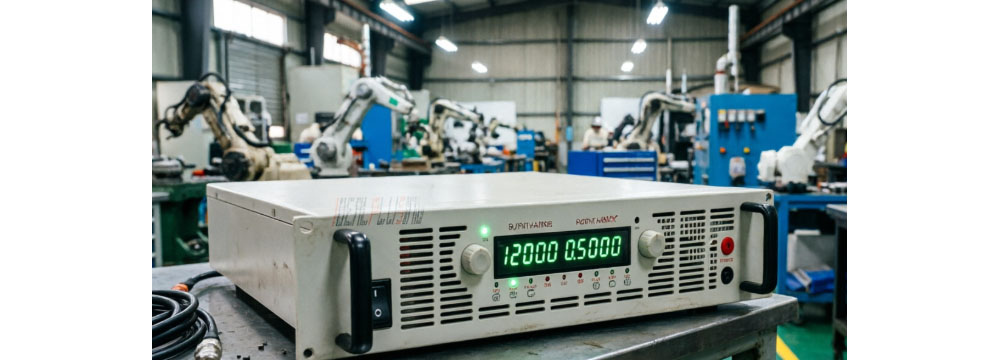
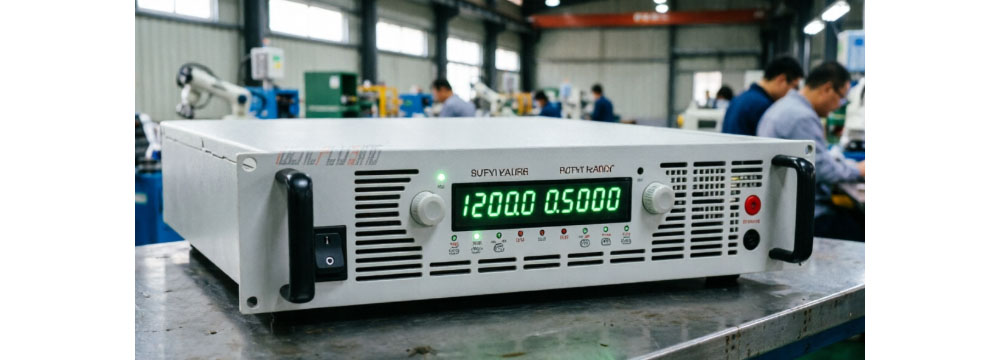
In terms of equipment selection, output ripple, stability, response speed, and safety protection are key indicators—the smaller the ripple, the more stable the power supply, and the smaller the experimental error; complete overcurrent and overvoltage protection can effectively avoid damage to the load and the power supply itself. The IDEALPLUSING adjustable power supply commonly used in laboratories has balanced performance in accuracy and reliability, excellent ripple control, and complete protection functions. It can meet various scenarios such as teaching experiments, product debugging, and component testing. It is easy to use and has a low threshold for getting started, suitable for both beginners and professionals.
4. Essential Operation Tips for Beginners
Using the adjustable power supply correctly can not only ensure experimental safety, but also extend the service life of the equipment and ensure the accuracy of experimental data. The following 3 core operation points must be kept in mind by beginners.
Before powering on, set the voltage and current to the minimum to avoid high-voltage and over-current impact at the moment of power-on, which may damage precision electronic devices. This is the most basic and critical step; set the power output according to the rated parameters of the load. For example, when testing a 5VDC microcontroller circuit, the voltage should be accurately set to 5VDC, and the current limit should be set to about 1.2 times the rated value of the device to ensure the normal operation of the device and prevent burnout due to overcurrent; if there is an abnormal output during the experiment (such as sudden voltage change or excessive current), turn off the power immediately, first check whether the load has problems such as short circuit or wiring error, then check the power parameter settings, and do not adjust blindly with power on to avoid expanding the fault.
5. Typical Applications of the Adjustable Power Supply
The adjustable power supply is widely used in electronics education and development, far beyond basic circuit testing. In battery R&D and testing, it can simulate the charging and discharging process under different voltages and currents, and accurately verify the core performance of the battery such as capacity and cycle life; in LED photoelectric characteristic testing, by continuously adjusting the current, the changes in brightness, color temperature and power consumption of LED can be observed, providing data support for lamp R&D; in sensor calibration, it can provide a stable reference voltage to ensure the measurement accuracy of the sensor; in industrial equipment maintenance, it can simulate the normal power supply condition of the equipment and quickly locate the circuit fault point. It is not only a common R&D tool for electronic engineers, but also an important teaching equipment for electronic major students to understand circuit and power supply principles and improve practical operation ability.
6. Common Misunderstandings in Using Adjustable Power Supplies
In addition to standardized operation, avoiding use misunderstandings is also very important. Many experimental mistakes stem from misunderstandings about adjustable power supplies. Misunderstanding 1: Ignoring load matching and blindly setting excessively high voltage, leading to device burnout; Misunderstanding 2: Only focusing on voltage adjustment and ignoring current limit setting. Once the load is short-circuited, it will cause double damage to the power supply and the load; Misunderstanding 3: Directly cutting off the power after the experiment without adjusting the voltage and current to the minimum, which is easy to produce impact when starting the machine next time. Mastering the correct operation method and avoiding these misunderstandings can give full play to the value of the adjustable power supply and ensure experimental safety and efficiency.
7. Conclusion
The adjustable power supply seems basic, but it is an indispensable equipment for electronic experiments and R&D. Understanding its working principle, distinguishing the difference from fixed power supplies, mastering standardized operation methods, and choosing a reliable device that suits the needs can not only significantly improve experimental efficiency and data reliability, but also avoid experimental faults and device damage, providing stable and flexible power support for circuit development, teaching practice, component testing and other work.