As a core device for converting electrical energy forms, an inverter can convert direct current into alternating current, and is an indispensable device in scenarios such as photovoltaic power supply, industrial power distribution, and emergency power supply. Inverters are divided into single-phase inverters and three-phase inverters according to the number of output phases. The two have significant differences in structural design, output characteristics and application scenarios. Clarifying the differences between single-phase inverters and three-phase inverters can provide a scientific basis for the selection of inverters in different power consumption scenarios, making the performance of the inverter highly compatible with power consumption needs.
Differences in Structural Design and Output Characteristics
The structure of a single-phase inverter is relatively simple. The core inverter module only needs to be adapted to single-channel AC output, the complexity of circuit design is low, the overall volume is small and the weight is light, and the difficulty of daily installation and commissioning is also lower. The output voltage of a single-phase inverter is single-phase alternating current, and the stability of the voltage waveform is suitable for low-power power demand, with better energy efficiency performance when operating under light load conditions.
The structure of a three-phase inverter is more complex, with three independent inverter modules built-in, which need to ensure that the phase difference of the three-phase alternating current is accurately maintained at 120°. It has higher requirements for circuit regulation and component precision, and its overall volume and weight are also larger than single-phase inverters of the same power. The three-phase alternating current output by the three-phase inverter has the characteristic of power balance, which can provide stable power support for high-power equipment. Its operating efficiency and stability under full load conditions are far superior to single-phase inverters, which is the core reason for the wide application of three-phase inverters in industrial scenarios
Different Application Scenarios and Adapted Loads
The adaptability of single-phase inverters is concentrated in low-power, single-channel power consumption scenarios, and it is the mainstream inverter type in the civil field. Scenarios such as household photovoltaic power supply, small household appliance emergency power supply, and portable mobile power supply can all realize the conversion from direct current to single-phase alternating current through a single-phase inverter. Its compact volume also makes the single-phase inverter more advantageous in mobile power supply scenarios. In ordinary civil scenarios, the cost performance and practicality of single-phase inverters can meet basic power needs.

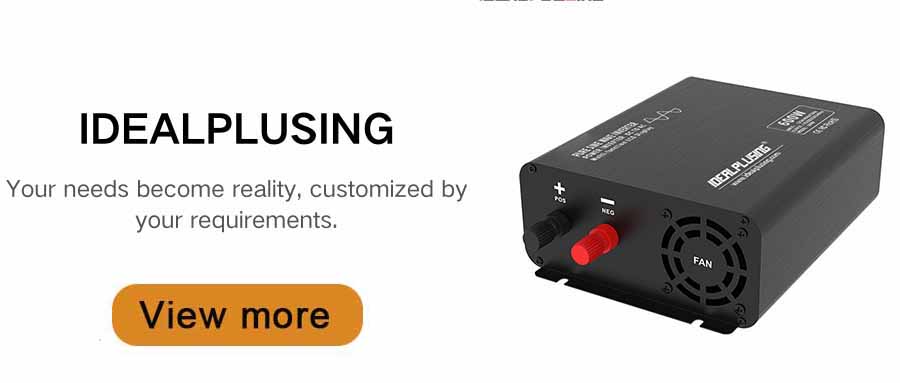
Three-phase inverters mainly focus on medium and high-power industrial and commercial scenarios. Large motors and assembly line equipment in industrial production, centralized power supply systems in commercial buildings, and large photovoltaic power stations all require three-phase inverters to provide stable three-phase alternating current to ensure the smooth operation of equipment. The inverter series of IDEALPLUSING takes into account the civil adaptability of single-phase inverters and the industrial stability of three-phase inverters, and can provide adapted inverter solutions for different scenarios. In addition, in some large shopping malls and logistics warehousing scenarios with high requirements for power supply stability, three-phase inverters have also become the first choice for inverter selection.
Differences in Use Cost and Maintenance Difficulty
Due to its simple structure, the single-phase inverter has lower production and manufacturing costs and a more affordable selling price. In addition, the later maintenance only needs to detect the single-channel inverter module, with low maintenance difficulty and cost, which is suitable for low-power power consumption scenarios with a limited budget.
Due to the high precision of core components and complex circuit structure, three-phase inverters have higher production and procurement costs. The later maintenance requires professional personnel to perform synchronous detection and debugging of the three-phase modules, which has higher requirements for maintenance technology and relatively high maintenance costs. However, combined with its medium and high-power power supply capacity, it still has high use value in industrial scenarios.
The selection of the number of inverter phases is core to the power and type of the electrical load. Single-phase inverters are suitable for civil low-power scenarios, and three-phase inverters support industrial medium and high-power needs. There is no distinction between the two in terms of advantages and disadvantages, only different scenario adaptability. Choosing a suitable inverter according to the actual power demand can maximize the power conversion efficiency of the inverter. Whether in civil or industrial scenarios, choosing a suitable inverter is the key to ensuring stable power supply.
IDEALPLUISNG Power Expert:
We focus on the research and development, sales and services in the fields of DC-DC power modules, AC-DC rectifier modules, DC-AC inverters, AC power supplies, DC power supplies, LED power supplies, chargers, rectifier systems, etc., providing personalized, efficient, reliable and cost-effective power solutions for all walks of life.
Thank you for considering our services.