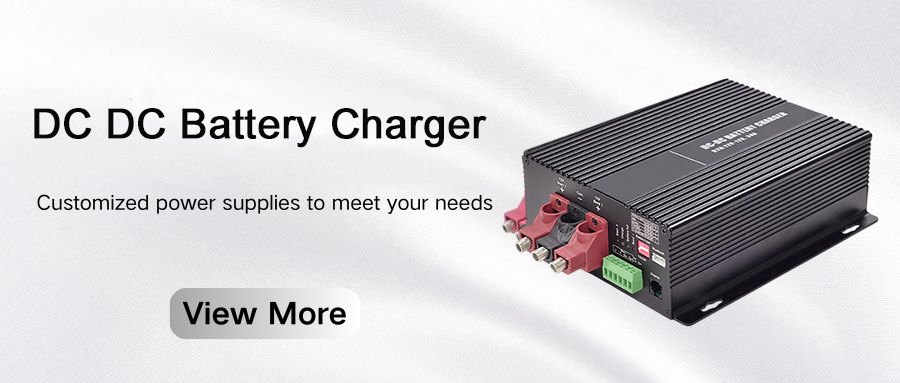
In the process of the gradual popularization of high-voltage fast charging and high-density power supplies, DC-DC chargers and silicon carbide (SiC) power switching devices have formed a deeply synergistic technical combination. They are not simply supporting relationships, but in-depth adaptation between underlying characteristics and system architecture, jointly driving charging systems toward higher efficiency, miniaturization, and high reliability. DC-DC chargers undertake the core functions of buck-boost, isolation and voltage stabilization of DC power, and are widely used in on-board charging, industrial power supplies ,energy storage power conversion and other scenarios. Silicon carbide (SiC) power switching devices, with their own material advantages, have broken the performance bottlenecks of traditional silicon-based devices and become a key support for the upgrading of DC-DC chargers.
Core Requirements and Traditional Limitations of DC-DC Chargers
The core performance indicators of DC-DC chargers focus on conversion efficiency, power density and long-term stability. Traditional silicon-based MOSFET and IGBT devices have problems such as high switching losses, high on-resistance and insufficient high-temperature resistance in high-voltage and high-frequency scenarios, which makes it difficult to improve the efficiency of DC-DC chargers, unable to effectively reduce the volume, and the heat dissipation cost remains high, which is difficult to adapt to the actual needs of high-power fast charging. This also provides space for the application of silicon carbide (SiC) power switching devices.
The Empowering Role of Silicon Carbide (SiC) Power Switching Devices in DC-DC Chargers
As a third-generation wide-bandgap semiconductor, silicon carbide (SiC) has key parameters such as breakdown field strength and thermal conductivity far superior to silicon materials, which accurately matches the upgrading needs of DC-DC chargers. First of all, silicon carbide (SiC) power switching devices have low on-resistance and near-zero reverse recovery charge, which can greatly reduce the switching and conduction losses of DC-DC chargers and improve the overall conversion efficiency of the whole machine; secondly, the low-loss characteristics support DC-DC chargers to work at higher frequencies, reduce the volume of passive components, and achieve higher power density; in addition, their high-temperature and high-voltage resistance can simplify the heat dissipation design of DC-DC chargers, improve reliability in harsh environments, and optimize dynamic response to adapt to fast charging scenarios.
Synergistic Value and Industrial Application of the Two
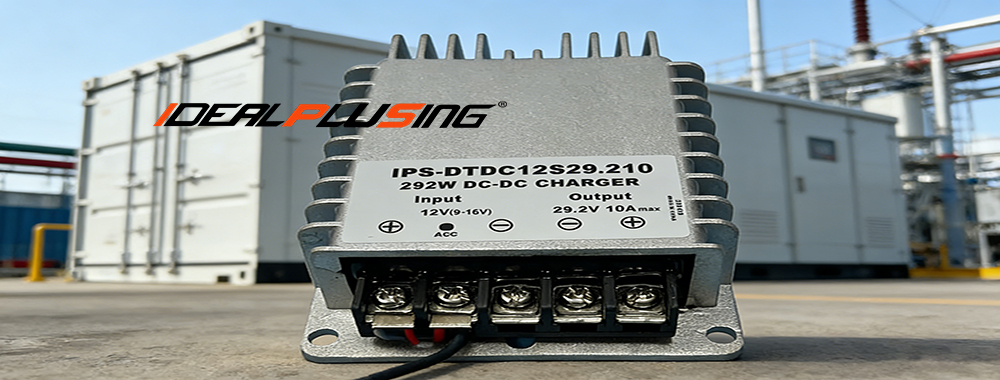
The combination of DC-DC chargers and silicon carbide (SiC) power switching devices is a system-level optimization. Silicon carbide (SiC) power switching devices provide underlying support for the performance breakthrough of DC-DC chargers, and DC-DC chargers provide large-scale application scenarios for silicon carbide (SiC) power switching devices. At present, DC-DC chargers equipped with silicon carbide (SiC) power switching devices have become the mainstream solution in on-board, industrial and other fields. Brands such as IDEALPLUSING also integrate this technology into related power solutions to further improve the comprehensive performance of DC-DC chargers.
Conclusion
DC-DC chargers and silicon carbide (SiC) power switching devices are core partners in the field of next-generation power electronics. The performance upgrading of the former relies on the material advantages of the latter, and the large-scale application of the latter relies on the scenario needs of the former. The coordinated development of the two will continue to promote the iterative upgrading of charging technology.