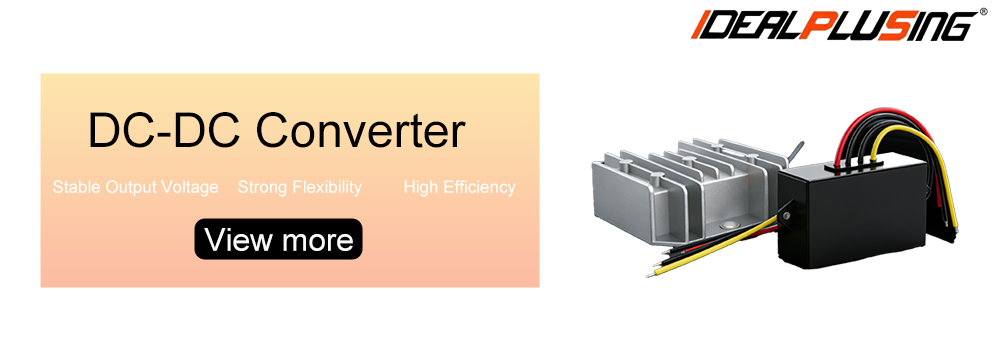
Industrial-grade DC-DC converters stand as indispensable core power conversion components across industrial control, new energy, communication base stations, and rail transit. Operating relentlessly in extreme conditions—featuring high temperatures, intense electromagnetic interference, severe vibration, and volatile voltage fluctuations—their longevity directly dictates the stability and maintenance overhead of the entire industrial system.
Rarely do these industrial devices face less rigorous demands than in consumer-grade applications. Yet, even their superior reliability cannot fully counteract the harsh operational environment. It is the complex on-site conditions that frequently trigger component degradation, performance erosion, and unplanned downtime, thereby curtailing their effective service life.
Nowhere is the impact of proper care more evident than in lifespan extension. Research indicates that through targeted environmental hardening, standardized operational maintenance, and design optimization, the field service life of industrial DC-DC converters can be extended by over 50%. This not only significantly reduces enterprise maintenance expenditures but also guarantees the consistent and stable operation of industrial systems.
I. Environmental Adaptation: Protecting Converters from Harsh Site Conditions
Harsh working environments are one of the biggest threats to the service life of DC‑DC converters, so good environmental adaptability is key to extending their working life. The operating temperature should be kept within the rated range of -40℃ to 85℃ to avoid accelerated aging of capacitors and damage to MOSFETs caused by overheating. This can be achieved through reasonable layout, additional cooling devices, and keeping the converter away from heat‑generating equipment to reduce heat buildup. Equipment such as inverters and relays generate strong electromagnetic interference, so converters need to be equipped with EMI filters and metal shielding cases. Also to be avoided are control circuit faults, for which high-voltage cables and low-voltage signal lines must be routed separately. Regular cleaning of dust from the converter surface and cooling channels is essential to maintain stable heat dissipation, while in damp environments, moisture-proof devices must be applied to protect components from corrosion and short circuits.
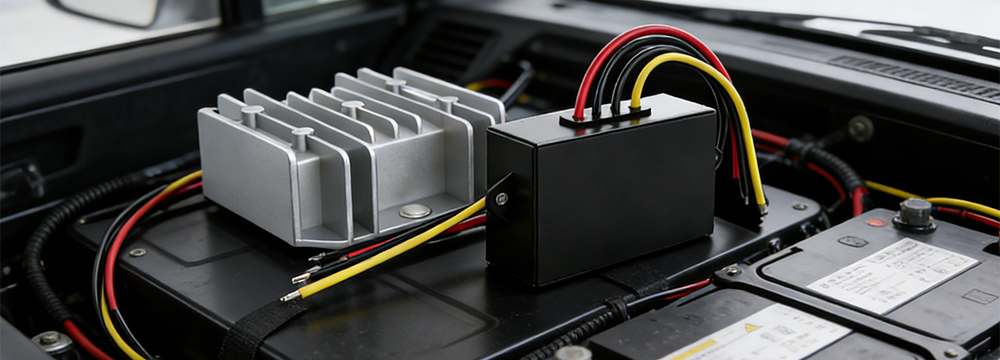
II. Standardized Operation and Maintenance: Reducing Aging and Unnecessary Faults
Standard daily operation and maintenance can find hidden dangers in advance, slow down component aging, and effectively extend the converter’s service life. It is necessary to check the stability of output voltage and current every month, observe whether there is abnormal noise, odor or overheating, and focus on the working status of the cooling system and wiring terminals. Output parameters should be calibrated every six months, and aging components such as capacitors and cooling fans should be replaced every year to avoid large‑scale failures caused by single component damage. Operators must strictly follow operating procedures, avoid frequent startup and shutdown, sudden load changes, overload or overvoltage operation. The load should be disconnected before power off to reduce impulse damage to internal components. At the same time, a complete maintenance log should be kept to record operating data, fault conditions and maintenance records for later management and troubleshooting.
III. Design Optimization: Enhancing Durability from the Source
Proper design optimization can improve the durability of DC-DC converters from the source, extending their field lifespan. In terms of component selection, priority is given to high-reliability, temperature-drift-resistant, and vibration-resistant industrial-grade components, such as GaN and SiC wide-bandgap semiconductor devices. These devices have low losses and long lifespans, extending the lifespan by more than 30% compared to traditional silicon-based devices. High-quality capacitors and transformers are selected to enhance the devices' resistance to aging.
In terms of circuit design, multiple protection mechanisms—including overvoltage, overcurrent, overheating, and short‑circuit protection—are integrated to quickly cut off output under abnormal conditions, safeguarding internal components. The optimized heat dissipation system uses a high‑efficiency structure and intelligent temperature control, automatically adjusting fan speed according to operating temperature for enhanced cooling performance.
In terms of installation design, a modular, integrated structure simplifies maintenance and replacement, with reasonable reserved space ensuring convenient wiring and ventilation. This compact yet user‑friendly layout greatly reduces installation difficulty and on-site commissioning time, while enhancing overall stability and service life.
We at IDEALPLUSING not only provide products, but also strive to provide customers with suitable power supply solutions and quotations.
Our core competitiveness lies in carefully selecting a variety of power supply options to help customers evaluate and choose the most suitable power supply solution.
We can offer AC DC power supply, DC AC inverter, AC AC power source(single phase or 3 phases),AC DC Ground Power Unit...