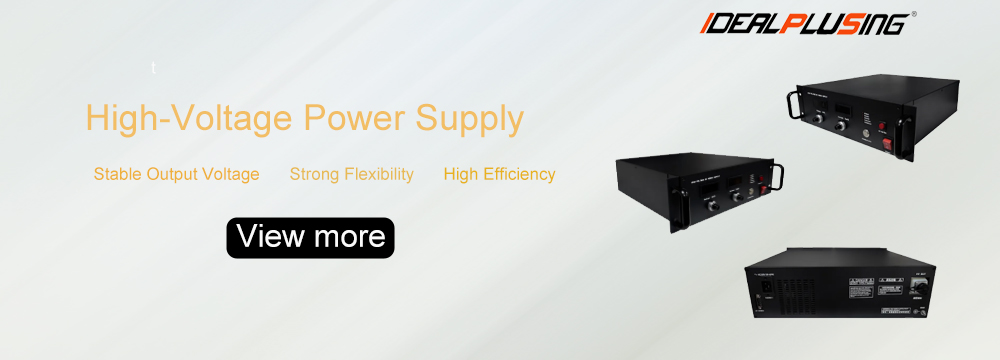
In the practical application of high-voltage power supplies, a common abnormal phenomenon is that the output voltage is normal under no-load condition but drops significantly after a load is connected. This problem not only affects the output stability of high-voltage power supplies but also reduces the operational accuracy and service life of supporting equipment, and in severe cases, may cause protective shutdown or hardware damage. Based on the operating characteristics of high-voltage power supplies and on-site maintenance experience, this paper systematically sorts out the causes of such faults to provide a reference for technicians in troubleshooting and handling.
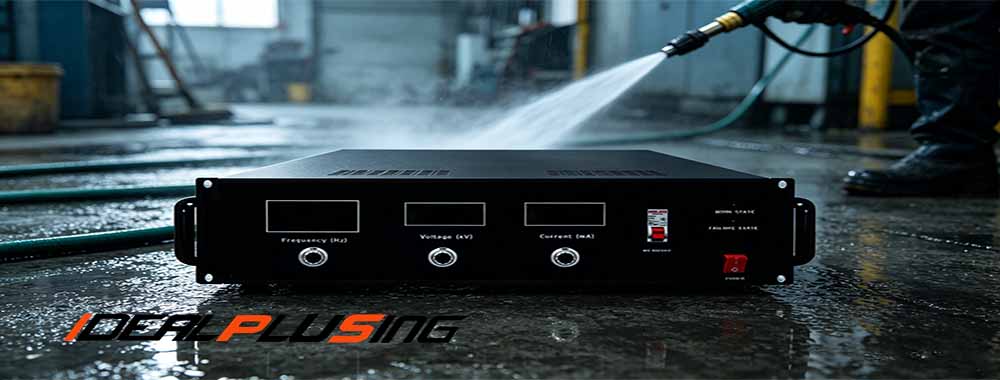
Load Matching and Overload Problems
The load capacity of a high-voltage power supply has a clear rated range, and abnormal load is the primary external factor causing voltage drop. When the load power exceeds the rated output capacity of the high-voltage power supply, or there is local insulation degradation or hidden short circuit in the load, the high-voltage power supply will automatically limit the output to protect internal components, which is intuitively manifested as a rapid voltage drop. Some capacitive or impact loads have a high instantaneous current peak at startup, which will also cause short-term overload of the high-voltage power supply, making the voltage unsustainable. In addition, incorrect load wiring or excessive contact resistance will form an additional voltage drop, further aggravating the voltage drop under load. In daily use, it is necessary to check the load parameters and specifications of the high-voltage power supply to ensure impedance matching and standard wiring, and avoid overload operation.
Performance Degradation of Internal Components of High-Voltage Power Supply
After long-term operation of a high-voltage power supply, the performance degradation of internal key components will directly weaken the load capacity. Filter capacitors are vulnerable components. The decrease in capacitor capacity and the increase in ESR value will lead to insufficient energy storage and voltage stabilization capabilities. The voltage can meet the standard under no-load condition, but cannot support the current output under load, and the voltage drops immediately. The aging of power switching devices and high-voltage rectifier components will increase conduction loss, reduce energy conversion efficiency, and cause the voltage regulation of the high-voltage power supply to fail under load. The parameter drift of voltage dividing resistors and sampling components in the feedback loop will destroy the voltage stabilization control logic, resulting in large fluctuations in output voltage with load changes. Regularly checking the status of internal components of high-voltage power supplies and replacing aging parts in time can effectively reduce such faults.
Abnormal Input Power Supply and Line Loss
The stable output of a high-voltage power supply depends on qualified input conditions, and abnormal input will indirectly cause voltage drop under load. If the input voltage is low, the fluctuation exceeds the standard, or harmonic interference is generated by sharing a line with high-power equipment, the front-end conversion circuit of the high-voltage power supply cannot obtain sufficient energy, and the output capacity is limited under load. Excessively thin input wire diameter, loose connection or oxidized contact will produce significant line voltage drop, resulting in insufficient actual input voltage of the high-voltage power supply. At the same time, slight leakage caused by aging or insulation damage of high-voltage output cables will cause shunt loss under load and lower the output voltage. During troubleshooting, it is necessary to measure input parameters, check line connection and insulation status, and ensure the power supply quality of high-voltage power supplies.
Protection Mechanism Triggering and Abnormal Control Logic
To ensure operational safety, high-voltage power supplies have built-in protection functions such as overcurrent, over-temperature and overload. Unreasonable protection threshold settings, large errors of detection components, or excessive temperature rise caused by poor heat dissipation of the equipment will cause the protection circuit to mis-trigger under load, forcing the output voltage to decrease. The control board affected by electromagnetic interference or abnormal program logic will also affect the closed-loop voltage regulation, resulting in unstable output after loading. Optimizing protection parameter settings, improving heat dissipation conditions, and providing proper shielding and grounding can reduce the probability of protection malfunction and improve the load stability of high-voltage power supplies.
Summary and Optimization Suggestions
The normal no-load and voltage drop under load of high-voltage power supplies are mostly caused by four factors: load matching, component aging, abnormal input and protection triggering. When troubleshooting, we can follow the logic of "external first, internal first; load first, power supply first" to locate step by step. In industrial and scientific research scenarios, it is crucial to select reliable and adaptable high-voltage power supplies. The IDEALPLUSING brand performs well in the stability and load capacity of high-voltage power supplies, which can effectively reduce the incidence of such faults. Daily load management, regular component maintenance, and ensuring power supply and heat dissipation can significantly improve the operational reliability of high-voltage power supplies and extend equipment service life.